|
Venezuela: This Week's News in a Nutshell |
|
|
Micro-finances managed by the citizenship
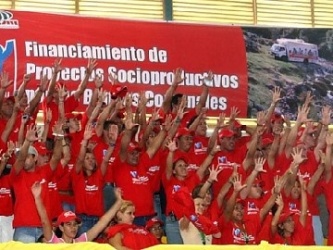
Communal Banks: three years transferring power to the people
On Monday 15, three years ago, President Chávez granted for the first time the finance to 200 communal banks around the country. The financing amounted to 150 million BSF ($69.8 million).
With the start-up of the Communal Power, promoted by the Bolivarian government, communal councils emerged as organizations ruled by communities; as well as communal banks which work as financial arms of this popular power.
Communal banks administrate the resources that go directly to communities through its communal councils and open the new possibility of direct assistance to the people who need it the most.
The mission of these organizations, whose aim is to administrate the popular economy, consists on financing community projects and grant micro-credits and train communities.
These communal banks represent a methodology and a sustainable integral development project whose responsibility includes many services: credits, training, saving, technical assistance, health, spiritual development and self teem for the success of the programs to be developed.
The banks are one of the most efficient tools to fight poverty. If managed based one principles and human values, it can help to recover people’s dignity and come out of poverty basing on their own effort and will.
The bank’s function is to administrate the resources; promote the creation of cooperatives; foster the analysis and the participative budget in accordance with community’s need and promote the reinforcement of the local economies.
Popular Experience
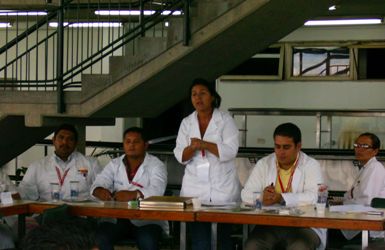
”Our community summons a Citizen’s Assembly in order to elect spokesmen to be part of the Communal Bank; four compatriots and me were elected to administrate the financial and non financial resources we would be granted through the Fund of Micro-financial Development (Fondemi). Before receiving resources we participate in workshops of technical-political training to administrate them correctly, after we were trained we started to work with the community.”
Cruz Maritza Figuera tells us how she started her work in front of the Rural Communal Bank of Santa Inés, in Cumaná, Sucre state (notheast).
Figuera expressed that in 2006 they received 300,000 BSF ($139,534) from the Fondemi and gave more than 55 credits to the members of the communities, who have boosted agriculture production, especially fruits.
She said that they provided resources for socio-productive textile projects, handcraft, among others, helping them with through the Fund of Social Action of the Communal Bank.
Figuera, who was granted the Merit Award for Work in third class by President Chávez, said that having been elected as spokesmen by the community is not her greatest satisfaction; but having been able to grant credits to men and women who worked hard to present their projects before the Citizen’s Assembly.
“They did not just present their projects, but Developer them. This is real. We have improved our quality of life,” she said.
Over 63,073 women and men have been trained by Fondemi before the financing to develop projects that improve the quality of life of communities.
Moving forward towards Socialism construction
In 2007, the communities are more and more organized and keep creating Communal Banks, which reached 1,428 banks and have received $246.8 million.
In 2008, 1,947 Communal Banks were financed with $282.7 million.
Communal banks were proposed by President Chávez in order to give resources to the communities that need it the most. Bui its responsibilities have gone beyond the financial aspect and have become into participation institutions which make the decisions about community’s process.
Over 3,381 have been created in the 24 states of the country and most of them have received a total of $599.3 million.
“From the beginning, communal banks have been essential part of the project whose aim is to transfer power to the people and communities; which is an expression of how socialism can be constructed form the small things, from the foundations, in order to democratize access to the excluded people. This is one of the support that the revolution has given for the collective’s happiness,” said the head of the state during his special program Aló Presidente Teórico Nº 1, held last Thursday 11, in the Teresa Carreño theater.
Plant of fuel distribution and storage inaugurated in Dominica
The Plant, based in the Dominican locality of Jimmit, has a storage capacity of 25,000 barrels of diesel, 10,000 of gasoline, 2,000 of jet A1 fuel and 2,000 of Liquefied Petroleum Gas for kitchens. Venezuela guarantees energy supply to the Caribbean island
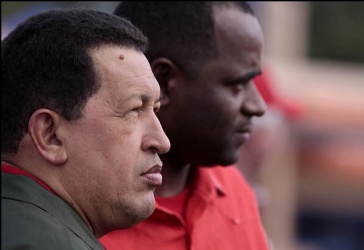
The President of the Bolivarian Republic of Venezuela; Hugo Chávez, and the Prime Minister of the Commonwealth of Dominica, Roosevelt Skerrit, inaugurated on Saturday 13 the Fuel distribution and Storage Waitukubuli Plant, located in the Dominican locality of Jimmit. The Plant is included in the agreements endorsed in the Energy Agreement of Petrocaribe.
After unveiling the foundation plaque of the plant, whose purpose is to attend the energy independence of the Island, the Venezuelan Chief of government remarked that it is an achievement of the Dominican government.
"This is your achievement, your governments; what we want is to be helpful with the Dominican people. We can get out of the misery left by colonialism only by being together. This is an achievement that must encourage us to to continue together in spite of the different problems we might come across with," he pointed out.
The Plant has a storage capacity of 25,000 barrels of diesel, 10,000 of gasoline, 2,000 of jet A1 fuel and 2,000 of Liquefied Petroleum Gas for kitchens.
During a walk by the installations, President Chávez talked to some gas and gasoline operators who manifested to be happy with the work they started.
"It is very motivating to remember when we came here for the first time to start the construction; look at the results; I therefore congratulate you," he said.
The Caribbean Island "has to worry no longer about fuel supply because now it is independent; It will never more depend on international corporations that submitted this people to abuse."
He remarked that for many years foreign companies took advantage of Dominicas fuel imports; they bought it to Venezuela and sold it to Dominica at the double, and even the triple, of its value.
"You got rid of that exploitation mechanism. Now you will have guaranteed fuel with no possibilities of plundering or blackmail," said President Chávez.
Likewise, he pointed out that Venezuela will be helpful in giving Dominica all the oil it might need for the next years with no qualms.
The president remarked that many years have passed for Dominica to have its own fuel plant, which will not be private but social property, of every citizen of this country, and administrated by the local government.
Finally, he congratulated the government and people of Dominica for all their achievements.
Skerrit, on his side, said: "we are glad to work together with the people of Venezuela and for everything its government has done for Dominica; this occasion permits us to continue welcoming this kind of investments and going in the same direction."
"We want to thank this integration initiative through Petrocaribe,the Bolivarian Alternative for the peoples of Our America (ALBA, Spanish acronym) because if we work together there will be less poverty in the world. In the Caribbean there are many countries that could not have overcome the economic challenges without Petrocaribe, because it has boosted the economy of so many nations that participate in it," he expressed.
He reaffirmed that in September, during the Annual Assembly of the UN, the countries of Petrocaribe will present their experience of this regional integration mechanism that is based on complementarity, solidarity, and the common will of progressing.
"The world must know what is happening in Central America and the Caribbean. When we talk about facing the challenges of the countries in development, these are the correct initiatives," emphasized Skerrit.
He ratified that he will work together with the bolivarian president to reinforce the links of friendship and to treat the social and economic problems of both countries.
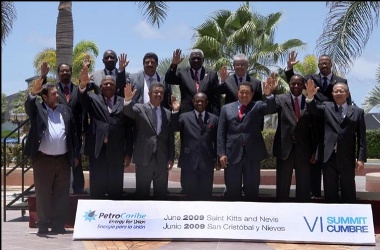
Declaration of the VI Summit of Heads of State
and Government of PETROCARIBE
Meeting in Basseterre, Federation of Saint Kitts and Nevis, on June 12, 2009, the Heads of State and Government representing the states parties to the PetroCaribe Energy Agreement:
RECOGNIZING the need for Latin American and Caribbean countries to rally efforts in confronting the harmful effects of the global economic crisis.
RECOGNIZING the important results and progress obtained in the region, especially in the social and energy sphere, as a result of the implementation of cooperation programs and initiatives among our nations.
CONSIDERING that the consequences of the current world economic crisis demand hard and collective work by the members of PETROCARIBE, in order to take measures that positively influence the economies of our nations so that they can continue to advance in the consolidation of independence and development in the region.
NOTING the achievement and progress scored in the invigoration of new sectors like food-growing, petrochemistry and training, among others, in the fulfilment of Resolution No 03.04-05 of the V Special Summit of Heads of State and Government of PETROCARIBE, Maracaibo, July 13, 2008, which have contributed to strengthening the Organization.
Have decided:
- To salute the holding of the VI Summit of Heads of State and Government of PETROCARIBE, an integration mechanism that has allowed us to move forward in common energy security as one of the central objectives of the Organization;
- To ratify that PETROCARIBE is an effective unity and cooperation platform which has made significant progress in the struggle for a higher level of economic and social development of member countries, thus contributing to the defence of our peoples in the face of the current world economic crisis.
- To highlight that PETROCARIBE is making progress in the achievement of energy security by mitigating the effects of the world economic crisis on the member countries’ economies, through the design and implementation of joint infrastructure projects in the fields of oil, gas, electricity and renewable and alternative energies.
- To welcome the resolutions approved by the 5th Ministerial Council of PETROCARIBE, particularly the resolution concerning a PETROCARIBE integrated fund, provided by the financed portion of the oil bill through the ALBA Bank, considering the principles of solidarity, complementarity and respect for the countries’ sovereignty.
- To highlight that the achievements resulting from the creation of Joint Ventures among member countries of PETROCARIBE has contributed to developing the energy infrastructure, direct supplies and social projects aimed at strengthening the energy sovereignty of the countries.
- To highlight the results attained by the PETROCARIBE Technical Working Groups created by Resolution No. 03.02.04, approved by our Ministers of Energy during the IV PETROCARIBE Summit held in Cienfuegos, Cuba, which allows us to move forward in determining opportunities in strategic areas like gas, petrochemistry and renewable energies together with the training of human resources, expanding the bonds of cooperation and solidarity among member countries.
- To welcome the proposal by the Dominican Republic to present the PETROCARIBE mechanism as a successful example of South-South cooperation at the next Session of the United Nations General Assembly.
- To recognize that PETROCARIBE is not just a shield but also a sword opening inroads for our peoples despite the actions of the most powerful nations in the world, an important mechanism for fair and supportive cooperation that outmatches any traditional commercial schemes.
Basseterre, Saint Kitts and Nevis
Venezuela Moves Forward towards its Food Sovereignty
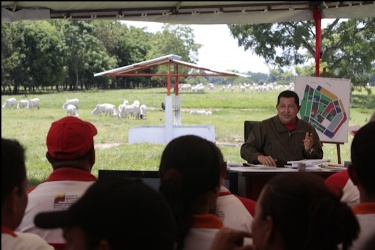
The President of the Bolivarian Republic of Venezuela Hugo Chávez ratified on Sunday that the country is bound for its food independence. It also aims to export to help other countries with smaller agricultural potential.
“We are showing how the socialist model continues stepping up the domestic production. This farm has cows producing 7.5 liters of milk per day (...) This property belongs to all Venezuelans," he said.
The Venezuelan president explained that when the government seized this farm a year and a half ago, it had 1,300 head of cattle and today it has 1,985, which represents an increase of production of of about 38 percent.
"We are on our way to be a food independent country, with food sovereignty; and this is the only way we will achieve it," he stated.
So far, the Venezuelan state has recovered 50 farms that were used for drug trafficking, thus adding 12,000 hectares with type III and IV soils fit for cattle rising.
President Chávez recalled that when he took office 10 years ago, the Venezuelan herd barely exceeded 10 million animals; then the coup d état took launched in April 2002, the economic boycott and terrorism by the end of that same year, and production plunged.
Notwithstanding, production is rising and we have 12 million head of cattle throughout the country.
In this sense, estimates indicate that by 2012 Venezuela may have 14 million animals, which will make ti possible to think that in the second decade of the revolutionary administration, Venezuela may export cattle to help countries that unfortunately do not have the potential to achieve this goal.
Enlandes produces 220.000 liters of milk a day
Venezuela’s President, Hugo Chávez, announced that the country moves forwards its food independence. He made this statement form the farm Agropecuaria La Bandera, located in Táchira state, where he broadcasted his TV and radio program Aló Presidente Nº 333
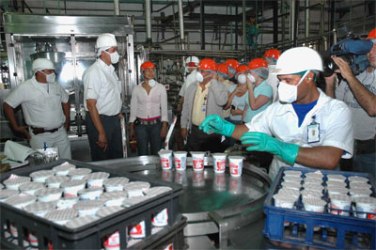
He announced the achievements obtained with the increase of the processing capacity of pasteurized milk of the company Empresa Nacional Socialista Lácteos Los Andes (Enlandes); which passed from 22,000 liters a day to 220,000 liters after the Bolivarian government purchased it in March 2008.
The management of this company shows the firm will of its workers, said the head of state. “We are demonstrating how the national production under our administration keeps increasing within the framework of the socialist model.”
Enlandes was incorporated to the network of the Venezuelan Food producer and Distributor (PDVAL), subsidiary of Petróleos de Venezuela in order to develop a new socialist productive system.
Enlandes industrial plants are distributed in many regions of the country and the production is distributed as follows: 25 per cent liquid milk; 18 per cent milk derivates, 56% juices and nectars. The plan of cheese and butter was reactivated. The cheese production amounts to 22,300 kilos monthly and 26,000 kilos of butter monthly.
Ramírez mentioned the strategy of Enlandes to eliminate meddling and take products at the lowest cost through a socialist distribution network, with the support of communities.
Minister Ramírez also said that Enlandes employs over 3,000 workers and holds 45,000 sales oulets in the country distributed in storehouses, shops and bakeries.
Finally, Enlandes chairman, Mauricio Herrera, said that the company’s production limit is 250,000 liters a day, which could be reached in the next months.
Petróleos de Venezuela S.A. (Pdvsa)
Venezuela’s government considers parent’s
custody ideal for children’s development
Venezuela’s government acknowledges the parental authority as a natural and ideal figure of children’s integral development. Thus, it is unacceptable to believe that the state will eliminate it to indoctrinate children of the country, said on Wednesday the President of the Autonomous Institute of the National Council of Children and Adolescent’s Rights, Litbell Díaz Aché.
During her interview in the program Despertó Venezuela, broadcasted by Venezolana de Television (VTV), Diaz explained that this makes part of the media campaign deployed by some opposition media outlets against the reform of the Organic Law of Education. They pretend to make people believe that Venezuela tries to re-edit the second version of Peter Pan operation.
“This kind of campaign tries to create chaos and fear among parents and Venezuelan representatives, since the Education Law tries to make the state a teacher, that is to say, the state is accomplishing its education duties regarding education plans,” he emphasized.
Likewise, Mrs. Díaz said that the education law has nothing to do with parent’s custody of children since “the government has attached to the rule of law and eliminating it (parent’s custody) would be illegal and unconstitutional.”
Pro-opposition leaders say that the government will transfer childrens custody to the State in order to indoctrinate them; but the real intention is contrary to this allegation, since the State has a group of institutions that offer protection and house to children and adolescent who, for any reason, are out their family.
“The government’s idea is to des-institutionalize children and to do so we are developing a replacement-family plan; which has allowed us to reintegrate, between August and May 2008, 513 children who were out their families. In this regard, the state guarantees children’s rights to live, grow and within a family,” she highlighted.
São Tomé and Príncipe to sign
education agreements with Venezuela
In order to establish a dialogue about future agreements on the training of university professionals, the Minister of Foreign Business, Cooperation and Communities of the Democratic Republic of São Tomé and Príncipe, Carlos Alberto Pires Tiny, gathered with the Higher Education Minister, Luis Acuña.
Sao Tome Ambassador, Homero Salvaterra, representatives of the Venezuelan Higher Education Ministry and the International Cooperation Office attended the meeting.
According to a press release, Minister Acuña stated the interest of the African country in signing remarkable social agreements with Venezuela.
He said that the meeting let know Venezuela’s experience in this field with Gambia and Sahrawi and other Latin American and Caribbean countries.
“We willing to show all the programs we have so, in case of signing bilateral agreements (…) the Higher Education Ministry can support them in the field of development of training and advising,” he added.
Sao Tome representatives expressed the possibility that students form their country study in Venezuela.
Minister Pires also expressed his government’s interests in knowing the National Program of Community Integral Medicine Training and its outreach to determine if it adapts to its needs.
A commission of Sao Tome is expected to visit Venezuela and, thanks to the advisory of the International Cooperation Office, its representatives could go on the necessary visits in order to know the Venezuela’s programs.
Venezuelan to Participate in 3rd
Ibero-American Guitar Festival in Washington DC
From the hand of composer and guitarist Luis Quintero, Venezuela will participate again in the 3rd Ibero-American Guitar Festival which will be held in Washington DC.. The event, on the 19th to 21st of June, 2009, will take place in the Rasmuson Theater of the National Museum of the American Indian.
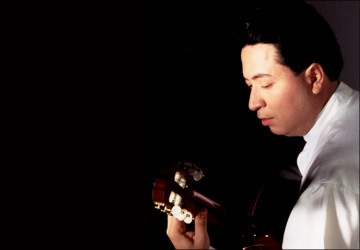
Luis Quintero is one of the most well-known Venezuelan soloists. His professional trajectory has positioned him as one of the most important players of the six strings at an international level.
Quintero is the only Latin American to graduate from the Post Graduate Guitar Program at The Julliard School of Music in New York with a scholarship for Excellence in the Arts", granted by the institution as the height of musical studies in the world.
On Sunday the 21st at 6 pm Quintero will present his repertory, which include "Siempre me Acuerdo de ti, Milonga y Chorinho "Homenaje a Villa-Lobos", "Oblivion", "Verano Porteño", and "De conde a principal y Jarillo".
"Again, we will have the opportunity to experiment with the rich diversity of our region, the musical heritage and the traditions that come from folklore to classical music and jazz. All in one weekend," said Patricia Abdelnour, Cultural Attaché of the Embassy of the Bolivarian Republic of Venezuela to the United States.
This festival will pay tribute to the legendary Brazilian composer Heitor Villa-Lobos, in commemoration the 50th anniversary of his death. Well-known guitarists from Argentina, Brazil, Uruguay, Spain, Portugal, Peru, Bolivia, Chile, Colombia, Costa Rica, Guatemala, the Dominican Republic, the United States, and Venezuela will be represented in the program of activities that pay tribute to maestro Villa-Lobos.
Like previous festivals, this years events are sponsored by the Ibero-American Association of Cultural Attaches, the Department of Music at George Washington University, the Embassy of the Bolivarian Republic of Venezuela to the United States, and for the first time, the Smithsonian Institute, through the Smithsonian National Museum of the American Indian and the Smithsonian Latino Center.
During three days the residents of Washington DC will have the chance to enjoy panels, conferences, and concerts of the artists, as part of the third edition of some of the most important musical events of the year. For more information, please visit the official web page of the festival.
MINCI





 Print This

 Print This