On September 7 the Swedish aid agency Swedish Committee for Afghanistan reported
that the previous week US soldiers raided one of its hospitals.
According to the director of the aid agency, Anders Fange, troops
stormed through both the men's and women's wards, where they
frantically searched for wounded Taliban fighters.
Soldiers demanded that hospital administrators inform the military
of any incoming patients who might be insurgents, after which the
military would then decide if said patients would be admitted or not.
Fange called the incident "not only a clear violation of globally
recognized humanitarian principles about the sanctity of health
facilities and staff in areas of conflict, but also a clear breach of
the civil-military agreement" between nongovernmental organizations and
international forces.
Fange said that US troops broke down doors and tied up visitors and hospital staff.
Impeding operations at medical facilities in Afghanistan
directly violate the Fourth Geneva Convention, which strictly forbids
attacks on emergency vehicles and the obstruction of medical operations
during wartime.
Lt. Cmdr. Christine Sidenstricker, a public affairs officer
for the US Navy, confirmed the raid, and told The Associated Press,
"Complaints like this are rare."
Despite Sidenstricker's claim that "complaints like this"
are rare in Afghanistan, they are, in fact, common. Just as they are in
Iraq, the other occupation. A desperate conventional military, when
losing a guerilla war, tends to toss international law out the window.
Yet even more so when the entire occupation itself is a violation of
international law.
Marjorie Cohn, president of the National Lawyers Guild and
also a Truthout contributor, is very clear about the overall illegality
of the invasion and ongoing occupation of Afghanistan by the United
States.
"The UN Charter is a treaty ratified by the United States
and thus part of US law," Cohn, who is also a professor at Thomas
Jefferson School of Law and recently co-authored the book "Rules of
Disengagement: The Politics and Honor of Military Dissent" said, "Under
the charter, a country can use armed force against another country only
in self-defense or when the Security Council approves. Neither of those
conditions was met before the United States invaded Afghanistan. The
Taliban did not attack us on 9/11. Nineteen men - 15 from Saudi Arabia
- did, and there was no imminent threat that Afghanistan would attack
the US or another UN member country. The council did not authorize the
United States or any other country to use military force against
Afghanistan. The US war in Afghanistan is illegal."
Thus, the invasion and occupation of Afghanistan, along
with the ongoing slaughter of Afghan civilians and raiding hospitals,
are in violation of international law as well as the US Constitution.
And of course the same applies for Iraq.
Let us recall November 8, 2004, when the US military
launched its siege of Fallujah. The first thing done by the US military
was to invade and occupy Fallujah General Hospital. Then, too, like
this recent incident in Afghanistan, doctors, patients and visitors alike had their hands tied and they were laid on the ground, oftentimes face down, and held at gunpoint.
During my first four trips to Iraq, I commonly encountered
hospital staff who reported US military raids on their facilities. US
soldiers regularly entered hospitals to search for wounded resistance
fighters.
Doctors from Fallujah General Hospital, as well as others
who worked in clinics throughout the city during both US sieges of
Fallujah in 2004, reported that US Marines obstructed their services
and that US snipers intentionally targeted their clinics and
ambulances.
"The Marines have said they didn't close the hospital, but
essentially they did," Dr. Abdulla, an orthopedic surgeon at Fallujah
General Hospital who spoke on condition of using a different name, told
Truthout in May 2004 of his experiences in the hospital. "They closed
the bridge which connects us to the city [and] closed our road ... the
area in front of our hospital was full of their soldiers and vehicles."
He added that this prevented countless patients who
desperately needed medical care from receiving medical care. "Who knows
how many of them died that we could have saved," said Dr. Abdulla. He
also blamed the military for shooting at civilian ambulances, as well
as shooting near the clinic at which he worked. "Some days we couldn't
leave, or even go near the door because of the snipers," he said, "They
were shooting at the front door of the clinic!"
Dr. Abdulla also said that US snipers shot and killed one
of the ambulance drivers of the clinic where he worked during the
fighting.
Dr. Ahmed, who also asked that only his first name be used
because he feared US military reprisals, said, "The Americans shot out
the lights in the front of our hospital. They prevented doctors from
reaching the emergency unit at the hospital, and we quickly began to
run out of supplies and much-needed medications." He also stated that
several times Marines kept the physicians in the residence building,
thereby intentionally prohibiting them from entering the hospital to
treat patients.
"All the time they came in, searched rooms and wandered
around," said Dr. Ahmed, while explaining how US troops often entered
the hospital in order to search for resistance fighters. Both he and
Dr. Abdulla said the US troops never offered any medicine or supplies
to assist the hospital when they carried out their incursions.
Describing a situation that has occurred in other hospitals, he added,
"Most of our patients left the hospital because they were afraid."
Dr. Abdulla said that one of their ambulance drivers was
shot and killed by US snipers while he was attempting to collect the
wounded near another clinic inside the city.
"The major problem we found were the American snipers,"
said Dr. Rashid, who worked at another clinic in the Jumaria Quarter of
Falluja. "We saw them on top of the buildings near the mayor's office."
Dr. Rashid told of another incident in which a US sniper
shot an ambulance driver in the leg. The ambulance driver survived, but
a man who came to his rescue was shot by a US sniper and died on the
operating table after Dr. Rashid and others had worked to save him. "He
was a volunteer working on the ambulance to help collect the wounded,"
Dr. Rashid said sadly.
During Truthout's visit to the hospital in May 2004, two
ambulances in the parking lot sat with bullet holes in their
windshields, while others had bullet holes in their back doors and
sides.
"I remember once we sent an ambulance to evacuate a family
that was bombed by an aircraft," said Dr. Abdulla while continuing to
speak about the US snipers, "The ambulance was sniped - one of the
family died, and three were injured by the firing."
Neither Dr. Abdulla nor Dr. Rashid said they knew of any
medical aid being provided to their hospital or clinics by the US
military. On this topic, Dr. Rashid said flatly, "They send only bombs,
not medicine."
Chuwader General Hospital in Sadr City also reported
similar findings to Truthout, as did other hospitals throughout
Baghdad.
Dr. Abdul Ali, the ex-chief surgeon at Al-Noman Hospital,
admitted that US soldiers had come to the hospital asking for
information about resistance fighters. To this he said, "My policy is
not to give my patients to the Americans. I deny information for the
sake of the patient."
During an interview in April 2004, he admitted this
intrusion occurred fairly regularly and interfered with patients
receiving medical treatment. He noted, "Ten days ago this happened -
this occurred after people began to come in from Fallujah, even though
most of them were children, women and elderly."
A doctor at Al-Kerkh Hospital, speaking on condition of
anonymity, shared a similar experience of the problem that appears to
be rampant throughout much of the country: "We hear of Americans
removing wounded Iraqis from hospitals. They are always coming here and
asking us if we have injured fighters."
Speaking about the US military raid of the hospital in
Afghanistan, UN spokesman Aleem Siddique said he was not aware of the
details of the particular incident, but that international law requires
the military to avoid operations in medical facilities.
"The rules are that medical facilities are not combat
areas. It's unacceptable for a medical facility to become an area of
active combat operations," he said. "The only exception to that under the Geneva Conventions is if a risk is being posed to people."
"There is the Hippocratic oath," Fange added, "If anyone is
wounded, sick or in need of treatment ... if they are a human being,
then they are received and treated as they should be by international
law."
These are all indications of a US Empire in decline.
Another recent sign of US desperation in Afghanistan was the bombing of
two fuel tanker trucks that the Taliban had captured from NATO. US
warplanes bombed the vehicles, from which impoverished local villagers
were taking free gas, incinerating as many as 150 civilians, according to reports from villagers.
The United States Empire is following a long line of empires
and conquerors that have met their end in Afghanistan. The Median and
Persian Empires, Alexander the Great, the Seleucids, the Indo-Greeks,
Turks, Mongols, British and Soviets all met the end of their ambitions
in Afghanistan.
And today, the US Empire is on the fast track of its
demise. A recent article by Tom Englehardt provides us more key
indicators of this:
In 2002 there were 5,200 US soldiers in Afghanistan. By December of this year, there will be 68,000.
Compared to the same period in 2008, Taliban attacks on
coalition forces using Improvised Explosive Devices (IEDs) has risen
114 percent.
Compared to the same period in 2008, coalition deaths from IED attacks have increased sixfold.
Overall Taliban attacks on coalition forces in the first five
months of 2009, compared to the same period last year, have increased
59 percent.
Genghis Khan could not hold onto Afghanistan.
Neither will the United States, particularly when in its
desperation to continue its illegal occupation, it tosses aside
international law, along with its own Constitution.
If you appreciated this article, please consider making a donation to Axis of Logic.
We do not use commercial advertising or corporate funding. We depend solely upon you,
the reader, to continue providing quality news and opinion on world affairs.Donate here





 Print This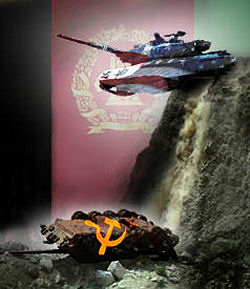
 Print This