Globe and Mail. Comment - Axis of Logic
Editor's Comment: The corporate world media is having a difficult time employing their typical language with this report. "Suicide bombers, terrorists, insurgents" - none of them really seem to work that well, although they do manage to emphasize the civilians among the dead. The bottom line: this was another successful military operation executed by a well-organized army in defense of their country against the puppet government planted by U.S. imperialists. We've known for some time now that the defenders control 70-80% of their country. This operation is especially significant because it shows the occupier's stronghold under siege. It's only a matter of time before the invader/occupier forces are routed from the country just like the last U.S. combat soldiers were finally driven out of Vietnam in 1973 with 58,000 U.S. soldiers dead, 1,000 missing in action and close to 2 million Vietnamese civilians and 1 million soldiers killed. The current military campaign carried out by the Taliban is reminiscent of the North Vietnamese Tet offensive that began on January 31, 1968 and proved to be the beginning of the end of the U.S. war in Vietnam.
- Les Blough, Editor
|
|
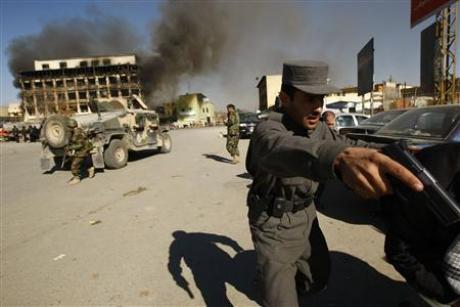
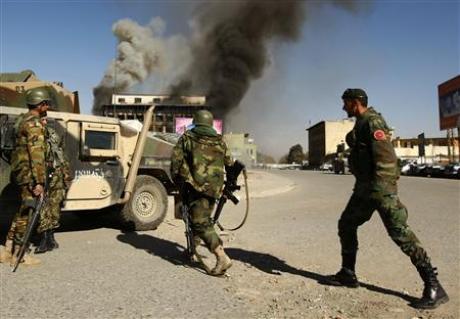
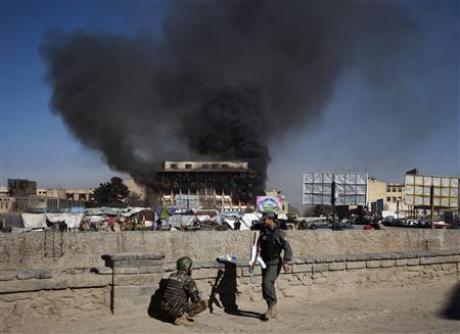
| An Afghan police officer takes position at the scene of an attack in central Kabul. Ahmad Massoud/AP |
The Taliban's brazen attack on the heart of Afghan government lasted more than six hours, but for Hamid Karzai it was a singular moment: When the weakness of his authority was on display for the world.
The strikes on Monday, executed by a highly co-ordinated team of suicide bombers, revealed a new level of sophistication for the insurgency.
They also highlighted the inability of the Afghan government to protect both its symbols of power and its citizens.
For a crucial instant, attention shifted away from Mr. Karzai's struggle to form a government to his government's failure to provide the most basic security for those who live on its doorstep.
The attackers managed to infiltrate key government buildings undetected, in broad daylight, at the height of morning rush hour.
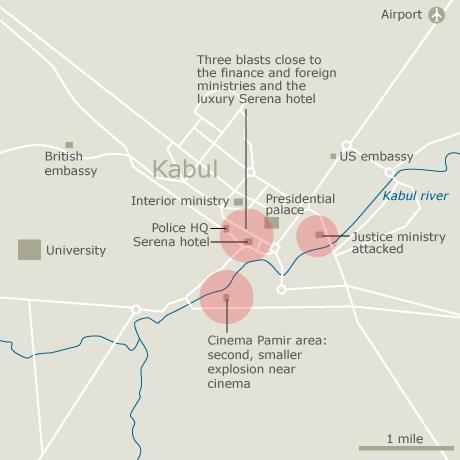
One suicide bomber drove an ambulance packed with explosives into Malik Asghar Square, near the Foreign Ministry, before detonating his charge.
Other insurgents strode into a busy shopping centre, before fanning out to the Serena Hotel, the Ministry of Justice and the Central Bank.
Simple wool shawls obscured their suicide vests.
|
|
|
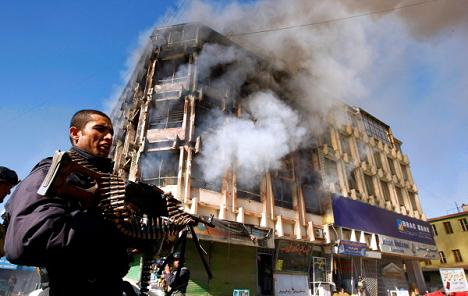
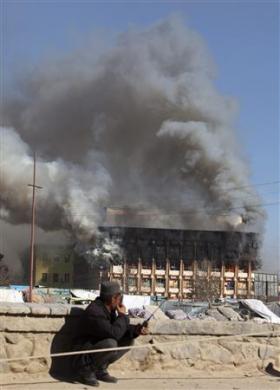
An Afghan policeman stands in front of the shopping mall, where Taliban gunmen battled security forces for hours, as the government forces restored control after the attack in Kabul January 18, 2010. We wonder what this policeman's fate will be when the invader finally leaves. He will no doubt become a victim of the invasion and occupation like the rest of the Afghan people. |
The fighting reached the gates of the presidential palace. Inside, Mr. Karzai – who is sometimes referred to as the “mayor” of Kabul for his lack of influence outside the capital – suddenly seemed to have lost control of his own city.
He had been preparing to swear in a dozen new cabinet members and launch a new reconciliation plan with Taliban insurgents. Instead, he was forced to deploy his own security detail to join the battle unfolding on his doorstep.
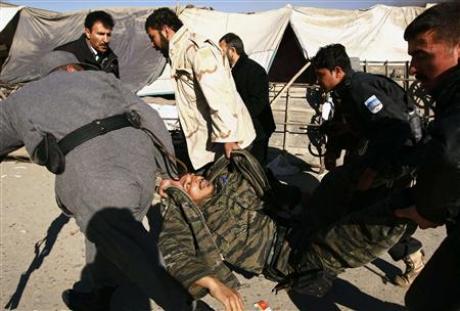
In the end, the Taliban caused considerably less damage than they intended: Three soldiers and two civilians – including a child – were killed, and at least 71 people were wounded. All seven of the insurgents died – some by their own hand, but most were shot down.
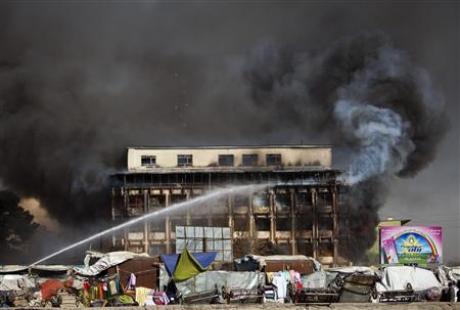
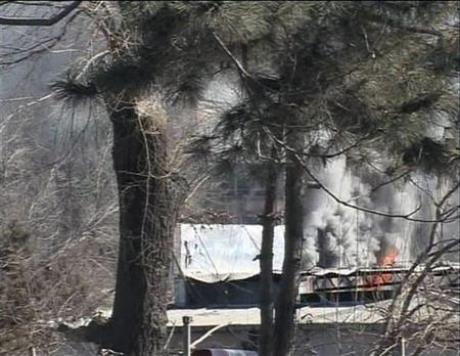
The five-storey Froshga market was a smouldering mess. However, the government ministries and the palace were still standing.
Still, something had changed: “In that moment I felt that Afghanistan was alone again,” said Shukriya Barakzai, a member of parliament.
It was as if the progress made in the past eight years, she said, had suddenly evaporated.
“It reminded me of my old Afghanistan. Afghanistan at war,” she said.
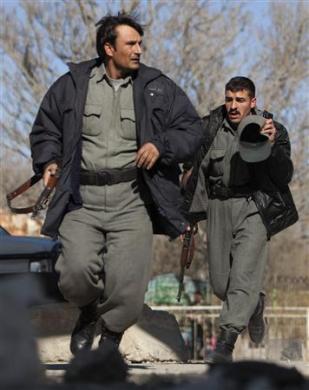
One policeman who fought on the front lines said, “It was a very hard day for us. A difficult day. We felt vulnerable.”
He had climbed into the burning supermarket and later raided a nearby cinema that served as a militant holdout.
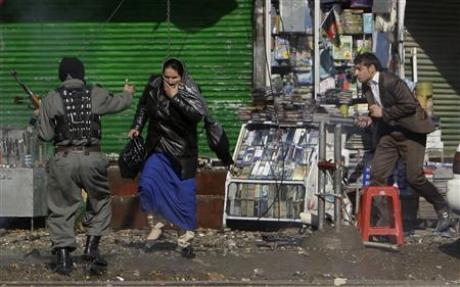
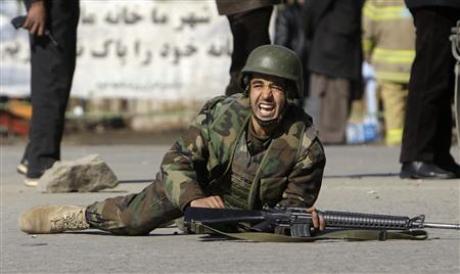
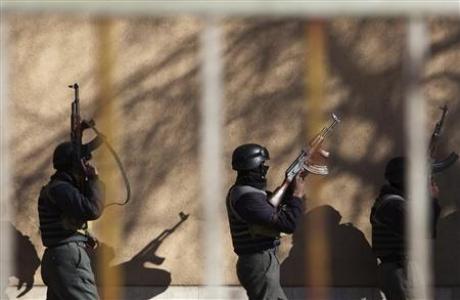
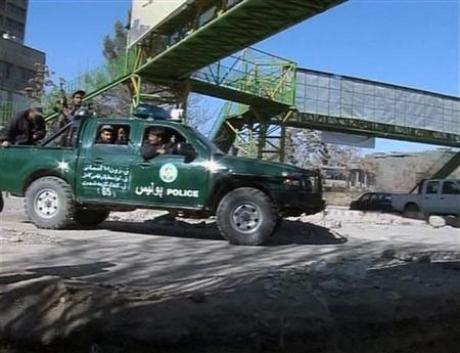
The scene outside the market was pandemonium as Afghan police and paramilitary forces scrambled to assert control. Many were visibly shaken.
Confusion and panic reigned as gunfire punctuated by at least three large explosions rang out in the streets.
For several hours it was unclear whether there would be further strikes as rumours swirled that more suicide bombers were on the loose.
Afghans, who typically shrug in the face of such danger, shuttered their shops and stayed in their houses as military helicopters circled overhead, late into the night.
Mr. Karzai, meanwhile, sought to quell fears, saying the situation was under control. He accused “the enemies of Afghanistan” of “trying to spread fear.”
The Taliban, which claimed responsibility for the attack, said it was meant to destabilize Mr. Karzai's “puppet government,” according to their spokesman, Zabiullah Mujahid. He called it a “spectacular success.”
By nighttime, most roads had reopened, but there was no sense of normalcy. Kabul's security was frayed. A series of lethal attacks on a United Nations guesthouse and on the Justice Ministry had sown fear in recent months.
However, last week a surprising poll showed the majority of Afghans felt optimistic about their future, for the first time in many years.
The attack might have changed that, at least in this city, where the insurgency is no longer an abstraction.
There was a sense Monday – whether it's true or not – that the Taliban were closing in, with “shadow governments” installed in many provinces, and suicide bombings, or IED attacks, seemingly every day.
This year, the winter, when Taliban fighters typically lay low and regroup, has offered no respite from war.
Meanwhile, Mr. Karzai's gestures at negotiations with Taliban fighters have been rejected.
The attack was timed just days ahead of an international conference on Afghanistan to be held on Jan. 28.
Mr. Karzai, who secured a second term in a fraud-filled election, has been struggling to win the confidence of donor countries and demonstrate he is willing to root out corruption in his new administration.
At the London conference, he may now face a whole new set of questions about his ability to govern, in light of Monday's attacks.
There were, however, some signs that his moment of weakness was galvanizing, with critics and supporters rallying around him in the wake of Kabul's siege.
Some interpreted the strikes on the capital as a sign of desperation, that the insurgency was on the wane.
“The Taliban is growing weaker in the South. In some areas they are extremely weak. They are forced into this new strategy to win attention,” said Khalid Pashtun, a member of the Afghan parliament from Kandahar, and supporter of Mr. Karzai.
Waheed Mozhdah, another analyst, said that Monday was a turning point – one that would force a recalibration on all sides.
“The Taliban wanted to show the world this government isn't working,” he said.
“They wanted to show that no matter how many dollars you spend on Afghanistan, the capacity of the government will never change,” he said. “It is up to Karzai to prove them wrong.”
The Globe and Mail
Photos: Reuters





 Print This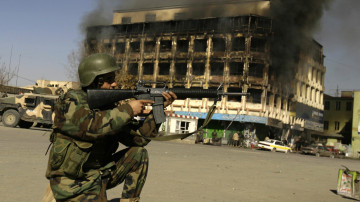

 Print This