|

|
Khadr Case Raises Broad Questions on Child Detainees
 Print This Print This
By Paul Weinberg
Inter Press Service
Tuesday, Feb 9, 2010
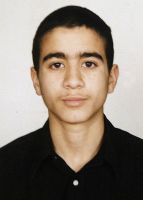 |
| Omar Khadr |
|
Canada's top judges expressed such concern in a
Jan. 29 decision, arguing that Khadr has endured and continued to
experience violations of his rights under the constitutional Canadian
Charter of Rights after the U.S. military captured the then 15-year-old
in 2002 and imprisoned him for the past eight years at Guantanamo Bay,
Cuba where he was interrogated in 2003 and 2004 by Canadian government
intelligence agents.
"The interrogation of a youth detained without access to counsel, to
elicit statements about serious criminal charges while knowing that the
youth had been subjected to sleep deprivation and while knowing that
the fruits of the interrogations would be shared with the prosecutors,
offends the most basic Canadian standards about the treatment of
detained youth suspects," the Canadian judges stated in their decision.
But the Supreme Court of Canada turned down orders from lower
Canadian courts to have the Conservative government of Stephen Harper
request the return of Khadr to face justice in a Canadian court system.
"Our first concern is that the remedy ordered [by the lower
court] gives too little weight to the constitutional responsibility of
the [Harper government] to make decisions on matters of foreign affairs
in the context of complex and ever changing circumstances, taking into
account Canada's broader national interests," Canada's top judges
wrote.
Canadian justice minister Rob Nicholson hailed the Supreme
Court's ruling, reiterating his government's line that "Omar Khadr
faces very serious charges including murder, attempted murder,
conspiracy, material support for terrorism, and spying."
The minister told reporters in a statement that "the Government will
carefully review the Supreme Court's ruling and determine what further
action is required."
A number of commentators have suggested that U.S. President Barack
Obama's administration might respond favourably to a Canadian request.
"There is reason to believe the United States would like to be
able to repatriate him if Canada would ask, but Canada refuses to ask,"
said Audrey Macklin, a law professor at the University of Toronto.
The circumstances of his capture in Afghanistan remain murky.
He is accused of committing a war crime for allegedly lobbing a grenade
and killing a U.S. military officer, following a shootout between U.S.
forces and al Qaeda fighters in July 2002. (As a child, he had been
taken to Afghanistan along with his sibling and his reportedly al
Qaeda-leaning parents).
However, last fall, the Toronto Star obtained classified
defence documents which indicate that "Khadr was buried face down under
rubble, blinded by shrapnel and crippled, at the time the Pentagon
alleges he threw a grenade that fatally wounded a U.S. soldier."
Michelle Shephard, the journalist who broke that story, told IPS that
Khadr's trial in July before a U.S. military commission will be the
first held at Guantanamo Bay under Obama's watch, despite the U.S.
president's initial pledge to close it following his election a year
ago.
"I also think from a political standpoint that the Obama
administration would not want to hold a trial at Guantanamo just for
the optics of it," says Shephard, the author of "Guantanamo's Child", a
book on the Omar Khadr case.
The U.S. military commission process, set up under former president
George W. Bush to deal with alleged terrorists in the post 9/11 period,
has been modified under Obama but it is still being described as "an
illegal" process by U.S. civil liberties organisations, Shephard said.
She noted that Khadr's U.S. defence lawyers will attempt in a
pretrial motion in April to have tainted evidence obtained during their
client's interrogation excluded from the actual trial in July.
In contrast to other terrorism cases in the U.S., more reliable pieces
of evidence on Omar Khadr, especially from Afghanistan, may be
available to the prosecution, including a video allegedly showing the
child soldier making improvised explosive devices, Shephard added. "I
presume there is a lot of intelligence out there on the Khadr family,"
she said.
Meanwhile, security specialist Reg Whitaker suggested that the
Canadian Supreme Court wanted to avoid a constitutional clash with
Prime Minister Harper. The latter is keen to have Khadr stay in the
U.S. to satisfy "his core conservative constituency," he explained.
Whitaker echoed other commentators who interpret the top
judges' decision as a plea for Ottawa to set the stage for the
amelioration of Khadr's situation, but without any specifics laid out
in terms of appropriate action or a timeline.
"The implication is if the Canadian government does not come
up with any effective remedy for the violation of Khadr's rights, that
it might then be incumbent upon the courts to then impose a remedy, to
say 'you failed to respond to our exhortations in this matter, then we
will then have to take the next step,'" said Whitaker, a political
scientist and professor emeritus at York University.
University of Ottawa law professor and human rights specialist
Errol Mendes added that the court decision indicates that the judges
did not order Ottawa to seek Khadr's return to Canada because the
ex-child soldier's lawyers failed to demonstrate evidence of
negotiations with the U.S. administration on Khadr's legal status.
"The Supreme Court was basically restrained from agreeing with the
lower courts," Mendes told IPS. "I was blown over by the fact that
Khadr's lawyers are saying this is the end of the line for them [in the
Canadian courts]."
But one of Khadr's Canadian lawyers, Nathan Whitling, counters
that the ambiguity of the Supreme Court decision leaves open the option
for the Canadian government to essentially "do nothing" despite the
illegal aspects of Khadr's incarceration.
"I suppose in theory I could start a whole new claim to review
[the Canadian government's] decision to do nothing, but the Supreme
Court has not said [Ottawa] cannot do nothing, right. There is nothing
inherently wrong [from the judges' point of view] with doing nothing,"
he told IPS.
"We hope the Canadian government will do the right thing but
we don't think they will. And there is nothing obliging them to do any
particular thing," Whitling added.
The Supreme Court has essentially told the Canadian government
that it has broken the law with regards to Omar Khadr, and that
illegality is continuing, said University of Toronto law professor
Audrey Macklin.
"Now, if the government decides that the law is just an
obstacle that stands between it and the exercise of its power, to do
what it wants to do, then it will say, 'hey, no court is twisting our
arm, so we are free to do or not whatever we want,'" she explained.
Macklin told IPS she is not surprised by the Supreme Court of
Canada's "extreme caution in any matters concerning national security
[after] 9/11."
Canadian agents ignored their country's signature on
international protocols which stipulate that child soldiers must be
accorded separate, less severe treatment from that given adult
combatants, said Reg Whitaker, noting that Khadr was 15 when he was
captured and was still a teenager while under interrogation.
The security specialist says the Canadian government appears
to be downplaying the whole notion of a child soldier in international
law.
"Indeed, they have ordered the department of Foreign Affairs
and International Trade to stop using the term 'child soldier' in any
departmental communications. It's now a banned term in [Canadian
Conservative party] discourse. The denial is logically and legally
unsustainable, but they are unlikely to own up to this in public," he
said.
Inter Press Service
 Print This Print This
|
If you appreciated this article, please consider making a donation to Axis of Logic.
We do not use commercial advertising or corporate funding. We depend solely upon you,
the reader, to continue providing quality news and opinion on world affairs. Donate here
|
|
Featured

|