Tortured, Exiled Honduran Journalist Recalls His Experiences
Print This
By Tamar Sharabi interviews Cesar Silva
Upside Down World
Tuesday, Feb 16, 2010
Cesar Silva- Civil and Human Rights Activist, Journalist, Revolutionary.
Upside Down World: Before the Honduras Coup Detat of June 28th 2009, tell me a little about your life.
Cesar Silva:
I have always been involved in popular struggles. During university I
was elected Secretary of the University Reform Front (FRU) from where
we constantly held a line of complaints denouncing corruption and
participating in different actions to benefit students. I was also
elected president of Journalism Students for two consecutive terms from
1998 to 2002, during which we founded the "Vanguard University Journal"
and "Magazine Alert" that circulated once a month across the country's
universities.
Upon graduating from the National Autonomous
University of Honduras (UNAH), I worked for six years as a reporter for
Channel 9 TV (Vica TV), the last two years of which I was a news
director for that company in Tegucigalpa. I also worked for Channel 63
for two years, along with Renato Alvarez who is now director of the
news of Televicentro. (Read, ‘Coup Mouthpiece’) I also worked four
years at Channel 54, which produced a program called "The protagonists
of the News.”
In 2006 Jorge Arturo Reina Idiáquez (Ambassador
of Honduras to the UN) offered me a position with the Ministry of
Interior and Justice in the Zelaya Government. My position was Director
of Communications where I worked directly with the newspaper and
Channel 8, called ‘Citizen Power Information Network’ founded under
Zelaya’s government.
In May 2009 I was called to work with the
Presidential Palace to coordinate work for production and coverage of
the popular consultation process (‘cuarta urna’) for public Channel 8.
I was assigned a mobile unit to report from the northern municipalities
of Olancho and Francisco Morazán beside the first lady, Xiomara Castro.
That's how I became involved directly in the events during the coup.
UDW: What happened to you on June 28th?
CS:
Preparations were intense in the days before the coup and increased
when the Armed Forces refused to distribute electoral materials. The
ballot boxes were held at the air base Hernan Acosta. President Zelaya
along with supporters came to rescue the ballots to distribute them
into state cars. From there it was a race of information.
The
night of June 27, I was at the Presidential Palace until midnight and
in the early morning I left towards Olancho. When I passed the town of
Guaimaca (a town 90 km from Tegucigalpa) the President was being
captured. There, police and the army captured me as well. My cameraman,
driver, and assistants managed to escape to warn people what had
happened.
People gathered in Guaimaca at the town's central
park and demanded that the police release me. I was finally released by
noontime because of the people’s pressure. Still, the police called for
reinforcements from another municipality and within a half hour an army
truck arrived and began to repress people in the park and the police
forces chased me down.
People took me from house to house,
jumping lots and properties until I was in a safe place outside the
town. I stayed there until nighttime when presidential house vehicles
(that were still under the legitimate government) came to pick me up.
We had to travel on back roads to evade the army and police posts to
arrive in Tegucigalpa at two in the morning. Since their was a curfew
we had no choice but to reach the presidential palace where people
remained gathered in protest.
They seized the entire
equipment of the team; cameras and microphones. In Olancho they stole
our truck the mobile unit that accompanied the first lady, Xiomara
Castro. On the 29th more chaos came and repression continued.
View Mr. Silva's powerful documentary of the coup in Honduras,
"Repression in Honduras". Click link to learn more.
UDW: The
5th of July you helped carry the dead body of Isis Obed. How did it
feel to pause from your reporters role to help Isis receive medical
attention?
CS: It is impossible to separate
being a journalist and being a human being. As a reporter I was
interested in taking pictures, and I took the first ones because I
thought that Isis Murillo Obed was dead. Then I approached him and saw
that he was breathing and moving in the density of all the tear gas.
People were shouting that he was dead, but when I took him in my arms
he opened his eyes and tried to say something that molded into a moan
of pain.
There was still army gunfire hitting a small wall near
where Isis Obed fell. We could hear the bullets striking the wall, and
at that very moment there was an explosion and everyone hit the ground.
It turned out to be a motorcycle that had exploded. Consequently, I
gave the camera to a friend and shouted that we needed to move Isis.
With the help of some other guys we carried him about 300 meters to a
car that we found.
I felt anger, pain and helplessness. I did
not know the child's age, and perhaps had never seen him in my life. I
thought he was 10 or 12 years old. He had no weapons, he just looked
helpless. It looked so unfair that I just felt like yelling "Gorillas
assassinate children."
I forgot that I was a reporter and I
just thought of the life of that child. I asked for his family but
nobody knew anything. I hoped he would be saved in the hospital, but
taking the pictures, it seemed impossible for him to live. The shot
impacted his skull. On my chest there were remains of his brain and his
blood.
UDW: After this day, did anything change about the way you reported on the situation in the country?
CS:
I will never forget that moment. That event drives me to continue so
that Isis’s life and others will not go unpunished. The murderers must
pay their crime. Witnessing so many beatings, so much unjustified
repression, it was clear that the intentions of the coup were to
establish a dictatorship. I decided to continue looking for ways to
disseminate what was happening. I started working for the internet blog
and the National Resistance Front Against the Coup, and freelanced with
Radio Globo, Telesur and the History Channel.
I changed; I am
more insistent, I'm more critical. During the Michelletti regime I
collaborated in every way possible to denounce the coup. We went from
neighborhood to neighborhood, people to people. I grew more into a
neighborhood journalist, I just had to be more creative because they
stole or destroyed the equipment we had at every opportunity.
UDW: As a national reporter, how did you feel about the international media reporting on Honduras?
CS:
As always there are many interests. At first it seemed somewhat
balanced, but within a few days it was clear who uninformed and those
who told the truth. The big chains such as CNN, Univision, Telemundo
and others within a few days took off their mask and began calling
Michelletti president and considered it a constitutional succession.
Other European countries were more objective.
The independent
press were the ones who maintained the reality. They called it like it
was. Telesur was objective about the crackdowns and repression, but in
fact they were favorable towards Zelaya.
UDW: Talk about the elections that took place under the coup regime.
CS: I classify the elections on November 29th in two scenarios:
1
. The Resistance and the conscious people knew that the elections were
only to change the face of the coup, but that the situation would stay
the same.
2. The Nationalists interested in winning the elections wanted to secure work with the new government.
There was a low turnout. Supporters of the National party took
advantage of the situation because the Liberal party was split and had
called on supporters to boycott the elections. The images speak for
themselves. The streets were full of policemen and soldiers, the
military in the polling areas, and a permanent anxiety in the
population; panic, fear, terror and empty booths.
UDW: When did you begin to be threatened personally?
CS:
The threats started after July 5 when the police and army did not view
me as a journalist anymore. This increased when I traveled to Nicaragua
to do reports on Zelaya and after the demonstration on August 12 at the
National Congress when Deputy Ramon Velasquez Nassar was kicked. There
was brutal repression that day and I was physically assaulted. The
military forces took pictures and video of me.
In every march
afterwards the police would see me. Also in the eviction of the
peasants from the National Agrarian Institute (INA), the police
assaulted me and took pictures. Later, I would constantly receive
anonymous threatening phone calls. I changed my number, but I was still
being watched and persecuted. I ignored these threats and didn’t take
them seriously because everyday nothing would happen.
Then I
received a call from the Intelligence of the Armed Forces who warned me
to stop doing my work. I denounced this to Cofadeh and CODEH, two human
rights organizations.
UDW: Explain the events on that day you were kidnapped.
CS:
I was kidnapped on Monday December 29th when I was on my way from the
south where I went to distribute a documentary about the resistance and
met with related colleagues. Arriving in Tegucigalpa, I took a taxi
from ‘Loarque’ on the beltway around the city to my house. Having
traveled less than one kilometer, a vehicle approached us, a beige van,
and individuals drew their weapons from the window ordering the taxi to
pull over. We initially tried to run, but another vehicle crossed us on
the highway and we could not advance.
They approached the
taxi and held the driver at gunpoint, telling him to stay quiet
otherwise they would kill him. They pulled me out of the taxi beating
me up and took me into their car to a remote place in the mountains. We
traveled about an hour while I was beaten inside the car. First they
made me sit with my head between my legs, then they put a hood on me.
The kidnappers did not cover their faces nor were they wearing military
clothes but by their vocabulary and communication by telephone with the
‘Jackal,’ it was clear they were getting orders. We reached an area
away from the city where they put me in a dark room.
I was
held from December 29 at 9:00am until the December 30th at noon. During
these 27 hours I was interrogated every 45 minutes and punched in areas
that leave no trace; my feet soles, testicles, stomach, and back, using
their fists. I was naked and they kept wetting my body. In a moment of
increased tension they tried to suffocate me with water. They threw
water on my face until I was no longer able to breathe. I swallowed as
much water as possible, but as I felt like I was drowning, another
officer yelled that they would kill me another faster way.
The interrogations were about weapons; where they were, who were my
contacts and how many leaders existed. They also asked where all my
photos and videos were stored and what type of profile information we
had of military leaders. They continued to threaten that I would not
leave there alive and that I'd better trust in God. They offered me
drugs to take to ease the pain of dying which I refused to accept.
On the morning of December 30, one of the officers told me that my life
might be saved but that he wasn’t sure. Then I heard the torturers
begin to plan my death. One of them suggested a shot in the head but
then decided I would not suffer enough that way. Another one said they
would let me hang myself from a tree or that they drag me attached to
the car along the street. Then one of them said they could open my
stomach and slowly pull out my intestines so I could talk as I died.
Hours later they took me out of there blindfolded with a hood and took
me to “throw me out”. They dumped me in Tegucigalpa between the
neighborhood ‘Cerro Grande’ and ‘El Chile,’ in a sector that is
mountainous and very isolated.
UDW: You are
currently living in exile. How much time do you imagine you will need
to live outside your country in order to protect yourself?
CS:
Yes I am in exile now. Human rights organizations supported me to leave
Honduras and my few remaining friends recommended me to do the same in
order to save my life since Renan Fajardo who edited my documentary was
murdered in his apartment and Walter Trochez who helped distributed the
material was also killed. Without a doubt the next one was me.
I do not know how long I'll be out of the country. I am anxious to
return to be with my family and to continue to produce reports of the
experiences of people in the street, but it is difficult at this point.
UDW: In what way do you continue working from exile?
CS:
I have been fortunate to find many people who have been supportive and
have invited me to do lectures in universities and in grassroots
organizations. I've given four lectures with audiovisual students about
media coverage in risky situations.
I also do some radio and
television to discuss my experiences and do political analysis on the
situation in Honduras. I continue to write the chronicles of the coup
repression and am working on a book which I think will be called
"Repressed Honduras," which tells the whole story that people really
lived.
UDW: What is the hardest part of being in exile?
CS:
Maybe it's the hurry of leaving everything abandoned; your home, your
family, the stuff you had a hard time sacrificing and working for. In
my case, I left my loved ones in tears; my mother, my son.
The difficulty in arriving in the new place is getting rid of the
hatred and to stop thinking of what you left behind. You have to live
here as a ‘nobody’ so that know one can find you and you can avoid the
risks. The dreams abandon you, the uncertainty eats you.
UDW: As you analyze the difficulties of the 'free press' in Honduras with the new "unity government" of Pepe Lobo?
CS:
Free Press?! That will be difficult. This government is only the
continuation of the coup d'etat. They are not interested in telling the
truth to the the population. Porfirio Lobo and his people are
interested in being well and having their companies and their
businesses do well.
The independent press will remain at war, but the economically
suffocating private enterprise will remove them within a short time.
Watch Channel 36 and you will realize that the editorial policy has
changed. Although it continues to support the resistance, its profile
is different; it is more ‘pepista’.
The program ‘Habla como
Habla’ of Channel 66 has also changed, it is not with the resistance
anymore, but with the new government. Only Radio Globo stands firm.
Independent journalists and foreigners using their own websites are
those that will continue telling the truth.
Tamar Sharabi is
an environmental engineer and freelance journalist living in Central
America. She is working on media empowerment with human rights
organizations and on a documentary about the Honduran coup detat. To
support her work visit: www.giveforward.com/tamardocuments.
If you appreciated this article, please consider making a donation to Axis of Logic.
We do not use commercial advertising or corporate funding. We depend solely upon you,
the reader, to continue providing quality news and opinion on world affairs.Donate here





 Print This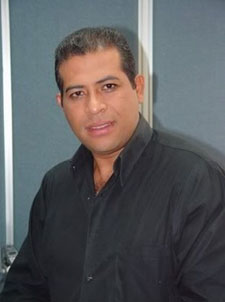
 Print This