|
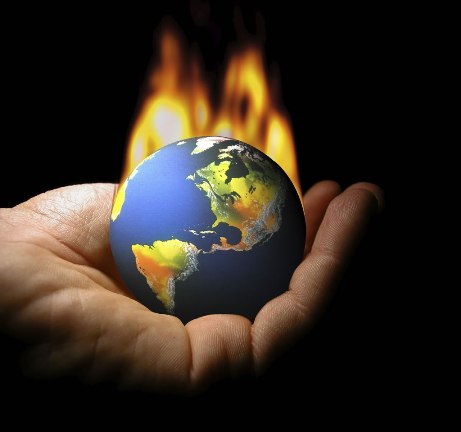
It is not difficult to get lulled into thinking that one’s actions have little effect, what with the powerful rule of the corporate-governmental elite too often hiding behind their armies, mercenaries and three-card montes, or behind their “press # to speak to...” a real person, if they even have a phone number.
"September 26th [is] celebrated to honor the deed of Stanislav Yevgrafovich Petrov on September 26th, 1983. Wherever you are, whatever you’re doing, take a minute to not destroy the world."
- Eliezer Yudkowsky 9/26/2010
|
|
|
Stanislav Yevgrafovich Petrov |
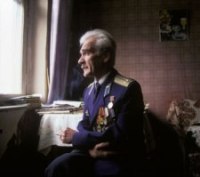
Stanislav Yevgrafovich Petrov comes to mind. Petrov “is a retired lieutenant colonel of the Soviet Air Defence Forces who deviated from standard Soviet protocol by correctly identifying a missile attack warning as a false alarm on September 26, 1983.”1 Some consider that he “saved the world by doing nothing,” others that he was only a chain in a protocol link and (while obviously having aplomb) was not so heroic.
“‘I had a funny feeling in my gut,’ he told The Post. ‘I didn’t want to make a mistake. I made a decision, and that was it.’ Luckily for all of us, he decided not to push that button.”2
A Russian Federation Press Release in 2006 stated that, “Under no circumstances a decision to use nuclear weapons could be made or even considered in the Soviet Union (Russia) or in the United States on the basis of data from a single source or a system.”3
Whatever the case, his action (or inaction) provides a valuable model of calm, rationale and intuition under pressure. Perhaps a split-second safety decision while driving conveys at least some of the feel of what Petrov accomplished (or un-accomplished) by doing nothing (by not pressing the panic button). A documentary film, The Red Button and the Man Who Saved the World,4 is in the works.
The tide sometimes turns the other way, however, as the following recent headlines show. “‘You Light Up My Life’ writer kills self,” and “Asians seek surgery to look ‘Western’.” Then again, another two recent headlines speak of healings: “Paralysed man can stand and move his legs again”5 and “‘Berlin Patient’ May Be First Man Cured Of AIDS.”6 If there's a zeitgeist message in all of this: these are the miraculous of times and the panic of times, to paraphrase Charles Dickens.
Petrov’s heroic inaction reminds this writer that most of us have been conditioned to think that the only way to improve the world is to constantly “do” stuff. Thus it can be a challenge to see the equally powerful effect of "not-doing." Of course “doing” has its place, yet as a friend once told me: “We are called human beings, not human doings.”
After a ho-hum day I have often cheered myself up by realizing all the things that didn’t go badly, all the things I didn’t screw up. Ancient Egypt had its list of “40 negative confessions,” for example, “I have not done grain-profiteering; I have not slain people,” though the modern Western world typically cites the more well-known list of “Thou shalt not...” 10 Commandments. In Petrov’s case, it can be aptly stated: he had not done panic button pressing, rather than, he was told what to not do.
Taking into account that the North Pole has literally shifted, may still be shifting,7 and that the earthquake/tsunami tragedy in Japan reportedly moved the Earth's axis 4 inches, ‘left a gigantic rupture in the sea floor, 217-miles long and 50 miles wide,’ and ‘also shifted Japan’s coast by eight feet in some parts,’”8 is it any wonder some people (including wild birds) don't know which way to turn?
Makeshift communities
One of the current important issues on the planet, for both human beings and other life forms, has to do with how we adapt to climate change or “climate revolt” as Doug George-Kanentiio, an Awkesasne Mohawk, called it during an interview on First Voices Indigenous Radio.9 While various countries (Spain suddenly in the action) proceed through revolutionary phases in a manner that historians and sociologists can more easily pinpoint, climate change effects (sudden or otherwise) are creating a different kind of revolution; a revolution that forces people, suddenly called climate refugees, to turn in another direction.
Akin to people working together as community after the Japan tragedies, the Missouri tornado and the Mississippi river floodings are providing opportunities for Americans to prove they are worth their community salt under duress.10
One of the big questions to ask is: in such situations, is there ample assistance ready? Ideally, peaceful command and control centers with, for example, equipment rentals and emergency supplies easily available, would provide good Boy Scout preparedness . . . yet much of the species, though perhaps more so the-powers-that-be, are hung-up on nations and boundaries; therefore, country A's problems are not necessarily country B's problems. Taking “climate revolt” into account, that kind of mindset is problematic.
The following headline and article highlights existing and potential sustainable energy pitfalls: "Green schemes are ‘wide open to major corruption’: Millions of pounds in grants and aid are being siphoned off by fraudsters, warns report.”11
One of the big ironies (or is it hypocrisies) of our age is that a package via UPS, USPS, or FedEx, to name a few, can be tracked precisely, whereas we hear all too often about charitable donations NOT getting where they are meant to get.
Environmental Experts
The article Watching Climate Change Through a Farmer's Eyes12 drives home the point that, due to changing weather patterns, farming in various parts of the world won't get any easier and may in fact be jeopardized:
“A group of women [from Himalayan villages] told the researchers that all their lives they had washed their food containers every 3 or 4 days. But recently, they found that they had to wash them every 2 days: a few degrees increase in temperature was causing food to spoil more rapidly.”
While computers may be helpful with gathering and disseminating scientific data, we cannot overlook the wisdom of local knowledge, whether from farmers, Indigenous Peoples, or those who year after year pay attention to the elements. “Susan Crate, an anthropologist at George Mason University in Fairfax, Virginia, says there is much to be learned from what she calls ‘place-based people,’ who ‘watch the weather closely and know the signs, smell rain in the air, tell the direction of the wind, the way the animals act. These people,’ she says, ‘are incredible experts on their environments.’”
Mustering a global level of human rights, as well rights of Mother Earth, will help avoid suffering. “Ecuador is the first country to incorporate rights of nature in their constitution.”13 Bolivia is also at the forefront of the movement and the example of these Latin American countries has spurred interest in Turkey.
Beyond boundaries: a consciousness shift
Just as national boundaries can affect rescue efforts, so too can national identities, governments, employers, and biased bureaucracies adversely affect workers, whether migrants or refugees. According to the article, The Plight of Migrant Workers in the Middle East and North Africa14:
“Many of the estimated twenty million migrant workers in the Middle East and North Africa (MENA) are from poor countries whose leaders have long failed to put in place mechanisms to protect their nationals from abuse, inhumane working conditions, trafficking and a means for repatriation during times of crisis.”
and,
“According to the UNHCR [United Nations High Commissioner for Refugees], nearly 140,000 foreign nationals have fled Libya via land borders. Including an estimated 69,000 Egyptians, who have crossed to the Egyptian border and another 75,000 Asians and Africans that have crossed into Tunisia while another 50,000 – including over 10,000 Egyptian workers – remain stranded in Tunisia.”
“With no end in sight, concerns are growing amongst some developing nations that turmoil in the region could spread to oil rich Gulf states where foreign labour accounts for more than eleven million of the workforce. But instead of waiting for the rebellions to die down in order to send migrants to Libya again or redirect efforts in locating new markets, labour sending countries should adopt appropriate policy measures to end reliance on manpower export and create incentives that encourage their nationals to stay home.”
As Americans well know, too much outsourcing has made for economic and national betrayal. And oftentimes national fervor gets stirred on the outside while the practicalities of business get done transnationally on the 'inside,' hence global corporate empire's three-card monte, in a nuthsell.
As the Revolutions Turn
According to Fabio Gándara, a 26-year-old law graduate,
"There are two main guilty parties here: the politicians and the people who run the global economy. The politicians, who are supposedly our representatives, take their orders from the markets, and deregulate the economy to allow them to speculate. This is how the movement’s slogan, which has resonated with so many, came about: Real Democracy Now: We are not goods in the hands of politicians and bankers.”15
Whether due to wars (illegal and otherwise), poor economic and living conditions, corporate downsizing and outsourcing a.k.a. profiteering, or climate revolt . . . the times are ripe for panic buttons. Yet, if we as a species can better blend Indigenous wisdoms with technological savvy, common sense people power with simple tools, and add to that the ability to discern fact from fiction and reality from fear, as Stanislav Yevgrafovich Petrov exemplified, we will be helping to bring about the miraculous --which may turn out to be as simple as growing fresh food, providing respectable working conditions, and putting roofs over people’s heads.
Revolution is a natural part of our human and divine evolution. Clothes get outgrown, snakes shed their skins, people mend their ways . . . all the while the planet, turning. People get mistreated, revolutions happen, Icelandic volcanic ash forces people to read at European airports, all the while . . . Earth . . . turning, turning . . .
Mankh (Walter E. Harris III) is an essayist and resident poet on Axis of Logic. In addition to his work as a writer, he is a small press publisher and Turtle Islander. You can contact him via his literary website.
Notes
1. Stanislav Yevgrafovich Petrov
2. The Man Who Saved the World by Doing Nothing
3. Russian Federation Press Release
4. The Red Button . . .
5. “Paralysed man can stand and move his legs again”
7. North Pole migration
11. Green schemes are ‘wide open to major corruption
12. Watching Climate Change Through a Farmer's Eyes
14. The Plight of Migrant Workers in the Middle East and North Africa