|
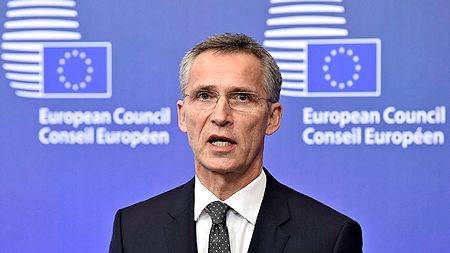
NATO, which was at loggerheads with Russia over the Ukrainian crisis, will be seeking ‘a more cooperative and constructive relationship’ with Moscow in the fight against terror, the block’s chief said after Wednesday’s deadly attack in Paris.
Russia “should be an ally in the fight against
terrorism,” Jens Stoltenberg, NATO Secretary General, stated
during his visit to the Bavarian town of Kreuth.
“That’s why we still strive for a more cooperative and constructive relationship with Russia. We think it is important that Russia, which is our biggest neighbor in Europe, and NATO are working together on important issues like fighting terror,” the NATO head is cited as saying by Bloomberg.
He also labeled the killing of 12 people by Islamist gunmen at
the French satirical newspaper, Charlie Hebdo, as “an attack on
the free press, on free opinion and on our open societies.”
READ MORE: Fatal shooting at Charlie Hebdo HQ in Paris LIVE UPDATES
The NATO head’s statement comes months after the Alliance announced the suspension of all "practical civilian and military cooperation" with the Russian side in April last year. The move was explained by Russia’s reunion with the republic of Crimea in March 2014 and Moscow’s alleged involvement in the military conflict in southeastern Ukraine. In May, NATO Deputy Secretary General Aleksander Vershbow said the block had to start treating Russia “as more of an adversary than a partner.” During his speech at the UN, Barack Obama, the president of the US, which is NATO’s leading member, labeled Russia as the second largest international threat – behind Ebola, but ahead of the jihadist Islamic State. READ MORE: Russia tops ISIS threat, Ebola worst of all? Lavrov puzzled by Obama’s UN speech The military buildup in Poland and the Baltic States saw NATO being labeled as a threat against Russia’s national security in the country’s new military doctrine, released in December.
READ MORE: Russia’s new military doctrine lists NATO, US as major foreign threats As for the Ukrainian crisis, Stoltenberg said the situation was “serious,” stressing that it’s “important to do whatever we can to reach a peaceful and negotiated solution.” The fighting in Ukraine began in April, after the southeastern Donbas and Lugansk regions refused to recognize the new coup-imposed authorities in Kiev.
The death toll in the Ukrainian conflict has exceeded 4,700
people, with over 10,300 wounded, according to UN estimations. Source: RT.com
|