Bt cotton has failed in Vidarbha: study + YouTube video
Print This
By Special Correspondent
hindu.com
Tuesday, Jun 16, 2009
`Its high input costs have increased farmers' indebtedness'
The hybrid Bt.cotton
MUMBAI: A new study on the introduction of Bt
cotton in Vidarbha reveals that it has failed in the region. Suman
Sahai, Director of Gene Campaign, told journalists on Wednesday that
despite specific knowledge that Bt cotton would not work in rainfed
areas, the government had introduced it in Vidarbha. The result was
that in an area with a history of indebtedness, the high input costs of
Bt cotton had increased indebtedness. The study had shown that 70 per
cent of small farmers had already lost their landholdings as collateral
for loans that they could never repay.
The Gene Campaign study, which will be ready
in four to five weeks, consisted of a technology adoption study to look
at how Bt cotton was adopted in Vidarbha. It is based on interviews
with around 500 cotton farmers from Amravati and Yavatmal districts.
Preliminary data shows that farmers who had adopted Bt cotton had a net
lower income than non-Bt cotton farmers.
Dr. Sahai said that Bt cotton did better in
irrigated areas and that it was a mistake to introduce it in an area
like Vidarbha. It did not perform well in the region because inputs
costs were high, including the cost of the seeds, there was an
abundance of spurious seeds and the technology had been adopted without
any preparation of the farmers for the complex management practices
that were needed. Seed dealers, she said, encouraged farmers to buy far
more fertilizer and pesticide than was needed, thereby raising their
input costs. They promised farmers that they would get between 12 to 15
quintals per acre when the actual production was in the range of three
to five quintals per acre. At the same time cotton prices came down
with the import of Chinese cotton. The study reveals that on average,
farmers who adopted Bt cotton lost Rs. 1,725 per acre. "Such economics
cannot work," she said.
The study revealed that many farmers adopted
Bt cotton because they believed it was a "government seed" and did not
know that it was privately produced and marketed. They also accepted it
because the government was actively promoting the technology. While
local officials, like the Agriculture Commissioner of Amravati, were
aware of the failure of Bt cotton, the state agriculture department
continued to promote it. "The role of the government has been
irresponsible and damaging," said Dr. Sahai.
Dr. Sahai also pointed that Bt was a limited
time technology. In the United States, where it has been introduced 10
years ago, it had already developed resistance. This was also happening
in China. In India, she said, "we are seeing resistance earlier because
of rampant proliferation of illegal seeds and the wrong techniques
being used."
The Bt technology was not need driven but supply driven, said Dr. Sahai.
She stressed that cotton farmers had not
demanded it and that in any case, the expression of the Bt cotton gene
worked for only 90 days while Indian cotton took 160 days to mature. In
other words, during the crucial period when the crop needed protection
from pests, it remained unprotected.
Side effects
The study had also collected anecdotal evidence about other side effects of Bt cotton on plants and animals.
For instance, cattle deaths had been reported
in areas where they grazed in harvested Bt cotton fields, women working
in cotton fields had complained of rashes, and there were reports that
mango trees were not flowering.
Despite such reports, the government had not
conducted tests to establish whether any of this could be attributed to
the introduction of Bt cotton. The impact of cotton oil, extracted from
Bt cotton, on human and animal health had also not been considered.
Dr. Sahai said it was essential to conduct
safety tests and also put in place a regulatory system before any new
technology is introduced.
If you appreciated this article, please consider making a donation to Axis of Logic.
We do not use commercial advertising or corporate funding. We depend solely upon you,
the reader, to continue providing quality news and opinion on world affairs.Donate here





 Print This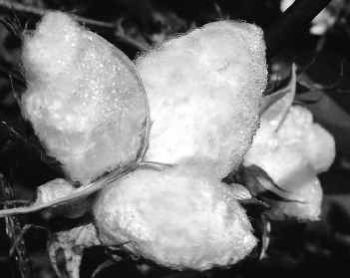
 Print This