By Shahid R. Siddiqi. Axis of Logic
SUSPICION, OUTRAGE AND SCORN!
by Shahid Siddiqi
In Pakistan, the feeling of admiration for America of yesteryears has degenerated into outrage. Is America to blame?
America – Yesterday & Today
In the good old days of the 1950s, America was perceived in Pakistan in a completely different light. It was popular for its culture, classical movies and music. Pakistanis looked upon it as a symbol of the free world, an icon of capitalism, progress and democracy. It fascinated young minds with its openness and ideas of freedom of thought and speech. It radiated newness about life and values at a time when Europe was struggling to pick up its pieces after WW II and the Soviet Union was feared, being shrouded in the iron curtain.
Because American leadership was regarded responsible, Pakistan’s founding fathers felt secure by aligning their country with America, without worrying about meanness in political attitude. To sentimental Pakistanis friendship meant friendship, whether in personal life or in matters of international relations, and they took America to be a friend in the literal sense.
But if one was to ask the people in the streets of Pakistan today, 7 out of 10 will blame America for all of Pakistan ills, which are numerous. They will cite a pattern of deceit, exploitation and misuse of trust by America spanning over five decades. Some of them perceive America to be an arrogant, war mongering super power which, propelled solely by its global agenda and imperial hubris, foments trouble, attacks and destroys people and countries – mostly on drummed up grounds.
Over a period of 50 years, Pakistan’s admiration for America turned into a feeling of suspicion, outrage, even scorn. This was reinforced by the emerging perception elsewhere in the world, and as proven by the polls, that America is the world’s most hated country. The wide eyed Washington beltway insiders shake their heads in disbelief and question this hatred. But the answer is simple. The world outside America hates Shylocks that rule America and refuses to meet their increasing demand for the pound of flesh.
The Machiavellian Approach
Pakistanis got the first taste of change in American behavior - and of Machiavellian approach to international relations, when America stood aside to let India attack Pakistan in 1965, bilateral and multilateral defence treaties notwithstanding. As if that was not enough, it slapped an embargo on arms sales both on Pakistan and India just to show parity, knowing full well that this would only hurt Pakistan, its ally, because India bought its military hardware from the Soviet Union from where it will continue receiving it uninterrupted.
In 1971 America again watched from the sidelines while Pakistan was dismembered and its 93,000 troops taken POWs. An outraged Pakistani nation called American attitude treachery, not knowing there was more to come.
Road Blocks for Pakistan’s Nuclear Program
In the 1970s, America created road blocks for Pakistan’s nuclear program and even threatened Prime Minister Bhutto of dire consequences. Most Pakistanis believe that Bhutto’s army chief General Zia was acting in cahoots with the Americans when he overthrew Bhutto and sent him to the gallows.
The people of Pakistan have never forgiven Zia for this collusion, grave injustice and the damage he did to Pakistan.
Afghanistan, America & General Zia
When America needed Pakistan’s help to knockout an invading Soviet army in Afghanistan in late 70s, it set aside all concerns about Pakistan’s nuclear program, declared it the ‘frontline state’, the ‘most allied ally’, and began pouring dollars and weapons to bolster Pakistan’s ongoing Jihad against the Soviet Union. ISI, presently a villain, was then America’s darling because it successfully masterminded the largest covert operation in history, which was music to American ears.
But once the Soviets conceded defeat and the Americans were able to extract a quid pro quo – safe withdrawal from Afghanistan in lieu of cessation of Soviet support to anti-US movements in South America, Pakistan was ordered to cease fire. When a defiant Zia refused, Junejo, his weak handpicked prime minister, was encouraged to bypass Zia and sign Geneva Accords against his wishes. Zia was to soon vanish from the scene, dying in an air crash. Pakistanis generally believe the Americans were behind his death.
As if describing Zia’s fate, Henry Kissinger said: "In this world it is often dangerous to be an enemy of the United States, but to be a friend is fatal”.
Pakistan & Afghanistan Abandoned
America then walked away, leaving Pakistan and Afghanistan to deal with the consequences of war. A dysfunctional, war torn Afghanistan was left to sink into chaos. An angry Pakistan paid a heavy political, social and economic price for the after effects of war, which were largely America’s responsibility. Political instability in Afghanistan created a dangerous border region that sucked Pakistan into internal Afghan political wrangling.
Pakistan, the ‘most allied ally’, had been used and abandoned by America.
America Slaps Sanctions Again
Soon after the Afghan war in 1990, America suspended all military assistance and economic aid to Pakistan under Pressler Amendment to punish Pakistan for its nuclear program. More sanctions followed Pakistan’s nuclear explosions in 1998.
Pakistan, America’s “most allied ally” now enjoyed the unique distinction of being the “most sanctioned ally”. Faced with a severe economic crisis, the Pakistani nation looked at America with scorn.
Pakistan Pays for F16 Aircraft and Receives Wheat instead
As if outrageous treatments meted out to Pakistan in the past were not enough, America refused delivery of F16 aircraft Pakistan had ordered in the 90s and paid for in advance, citing Congressional restrictions. Even the refund was refused. Much later, only when Pakistan’s services had become imperative after 9/11, did the U.S. decide to do something about it. Instead of F16s, the U.S. chose to send a shipment of wheat. If it thought the Pakistanis would be amused, they were mistaken. Pakistanis were outraged.
Meddling in Pakistan’s Internal Affairs
The American administrations came to treat Pakistan like a colony, with an expediency driven approach, particularly in the 80s and the 90s. Despite this humiliating treatment, Pakistan remained an American ally because its rulers, and these included Benazir Bhutto and Nawaz Sharif, did not hesitate to prostrate themselves in the White House seeking blessings from their godfathers.
This opened doors for blatant American intervention in Pakistan’s domestic affairs and key decision making.
War on Terror
After 9/11 the Americans were back in Islamabad coercing and cajoling President Musharraf into joining their war on terror because America couldn’t go it alone. Washington’s hullabaloo about Pakistan’s nuclear weapons once more went out of the window and dollars and weapons began to flow again to ‘strengthen Pakistan’ to fight the ‘American enemy’. As a reward for joining the war, President Bush honored Pakistan with the title of the ‘major Non-NATO ally’ that truly meant nothing, except to inflate Pakistan’s ego.
Later, as differences grew between America and President Musharraf over the extent of Pakistan Army’s involvement in operations against the Taliban, the Americans settled for a more pliable candidate to assume charge - Benazir Bhutto. Although General Hameed Gul (Retd.), former ISI chief, likes to believe that she was later repentant of her decision, but who knows! She did not live to tell the truth. General Gul also claims that Americans had reasons to have her killed, a charge that the Americans deny. President Musharraf was eased out and Benazir’s widower, who waited in the wings, was eased in.
Pakistan has paid a heavy price for the American war on terror. It suffered thousands of casualties – both of soldiers and civilians, and its fragile economy has been completely shattered. Its estimated war losses of $35 billion are yet to be reimbursed. Although much has been made by America of the economic assistance given to Pakistan to meet war expenditure, it is miniscule compared to assistance to Afghanistan ($143 Billion). Turkey was offered $30 Billion to join the war in Iraq.
Pakistan’s poor and the middle classes have collapsed due to recession, job losses and mounting poverty.
Reign Of Terror & Pakistan’s Nuclear Assets
During America’s war on terror, an organized reign of terror was let loose on Pakistan from the Pak-Afghan border region - FATA. The U.S. claimed it to be the work of ‘Islamic extremists’ (or TTP) whose declared aim was to establish Islamic order. Their actions, however, contradicted their claim. They killed innocent people, created chaos and destabilized the country, actions that are against Islamic teachings and earned public hatred for them. The truth is they were mercenaries hired to destabilize Pakistan at the behest of foreign interests.
As widespread killings, suicide bombings and attempted attacks on civilian and military installations began to escalate, as if in concert the West began a chorus about Pakistan’s imminent fall to militants and the risk of nuclear assets being seized and used against the West. No matter how silly and impossible, this scenario was aimed at justifying foreign intervention. There has been little doubt that this campaign was orchestrated by the proponents of denuclearization of Pakistan and – from destabilization to denuclearization – it was conceived, financed and supported from inside Afghanistan by RAMA and RAW, the Afghan and Indian intelligence agencies.
Pakistan Government openly blames Afghan and Indian agencies of supporting Balochistan Liberation Army and other insurgents fighting for an independent Balochistan, an idea that reportedly had its origins in the Pentagon.
It is inconceivable that Americans have been unaware of such conspiracies hatched under their very nose in Afghanistan, while they occupy that country and operate an elaborate intelligence network. They have refrained from denying these allegations that have been made publicly in the media and it would, therefore, be reasonable to assume that these conspiracies were at least in their knowledge.
Poor Diplomatic Judgment
Pakistan was rife with stories and suspicions about the intentions and activities of the American mission in Islamabad that revolved around ill timed expansion of U.S. embassy and the presence of infamous Blackwater operatives. At a staggering cost of $2 billion, the embassy is being expanded into a monstrosity, said to be the biggest facility in the region and reportedly to house a large number of marines with the intention to seize Kahuta nuclear facilities.
The stories refused to die despite desperate clarifications by the ambassador.
Having been taken for a ride so often by American administrations, there is such trust deficit for America in people’s mind that they simply refuse to believe anything that Washington has to say any more.
America-India Nexus
Meanwhile, America’s overtures towards India have also raised alarm.
In 2005, America offered a civilian nuclear deal to India in clear contravention of the spirit of the Nuclear Non-Proliferation Treaty. The deal which was finalized recently will open doors for Pakistan to seek a similar facility from China.
Then the Obama administration announced intentions to invite India to train Afghan National Army and the police force. The Pakistan Army had strong reservations in this matter. Such close Indian involvement with Afghan defence forces, composed of non-Pashtun tribes hostile to Pakistan is threatening and the threat is real. This is bound to lead to a poisoning of the Afghan mindset against Pakistan and, instead of being a peaceful neighborhood, the border region will become a source of trouble for Pakistan.
Polls Show America in Poor Standing
A recent survey for ‘al Jazeera’ by Gallup Pakistan found that 70% Pakistanis hold America to be the greatest threat to Pakistan’s sovereignty. Another survey in mid 2009 by Washington based Pew Research Center found that 64% of Pakistanis regard America as an enemy, only 9% believing it to be a partner. In another recent poll by World Public Opinion, Pakistan’s perception of the U.S. under the Obama administration was found not substantively different from that of the U.S. under Bush. Only 30% of Pakistanis showed any confidence that the U.S. president would do ‘the right thing regarding world affairs’.
After prolonged mistreatment and exploitation, these conclusions are fair and logical and it is no surprise that Pakistanis strongly oppose close ties with America. Clearly, America is incapable of bringing about fundamental and visible changes in its thinking, attitude and policies towards Pakistan that could restore the confidence of the people of Pakistan. Therefore, the chances of bridging these differences seem remote.
Very naive and shortsighted American administrations have committed a strategic blunder by losing the heart and mind of a nuclear armed nation of 170 million people, straddling a sensitive South and South West Asia. The American officials continue to believe that they could control and manipulate Pakistan by twisting the tails of its small coterie of rulers or buying them out. This may prove wrong and costly. No ‘Made in America’ regime will survive. The present crisis-ridden government carries this label and is looked upon with suspicion. Its poor governance has already begun to bring people out in the streets, who now talk of the need for a revolution, Iran and Kyrgyzstan being cited as models.
Pakistan’s Nuclear Assets
America would do well to cease threatening Pakistan’s nuclear assets, directly or through proxies. For the people and the army, the nuclear program is the corner stone of Pakistan’s existence and anyone trying to subvert it is considered the enemy of the state. Any attempt at intervention, as is being suggested by some western and Indian experts, would be a very naive thing to do and will plunge the subcontinent into a catastrophe of gigantic proportions.
President Obama’s recent statement that America has no intentions of seizing Pakistan’s nuclear assets should begin to clear the air on the nuclear issue. But the people’s distrust on this issue is so deep that his statement will not go too far and will not be taken on face value. Concrete steps would be necessary to lower the anxiety level both of the Pakistan Army and the people on this score. One such measure could be to recognize Pakistan as a nuclear power and stop maligning it for proliferation. Among other measures, America could follow parity while dealing with India and Pakistan on issues of nuclear cooperation.
President Obama Takes Note
Apparently, taking note of damaged relations at the people’s level, President Obama in his December 2009 policy speech, admitted: “In the past, we too often defined our relationship with Pakistan narrowly. Those days are over.... The Pakistani people must know America will remain a strong supporter of Pakistan’s security and prosperity long after the guns have fallen silent, so that the great potential of its people can be unleashed”.
Reassuring words indeed, but similar assurances in the past brought no substantive change in the American attitude. Even if Obama’s message is taken seriously as a signal for change of policy and attitude towards Pakistan, it remains to be seen how his words are translated into actions. The way Pakistan has been treated is more a question of wrong attitude, less of wrong policy. Policies can change overnight, attitudes take much longer time and change of outlook.
Read his bio and more analyses and essays by
Axis of Logic Columnist, Shahid R. Siddiqi





 Print This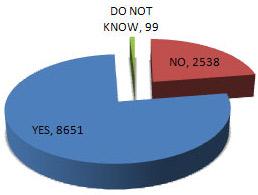
 Print This