By Lizzie Cocker*. Axis of Logic
|
|
|
Venezuelan president Hugo Chavez and
Chinese president Hu Jintao embrace |
The US and Europe’s “medieval crusade” being waged in full force in Libya, and forever looking for other ripe targets, signals the depth of denial they are in that their days of global dominance are over.
And that dominance is no more, precisely because of the emergence of governments via popular support which have increasingly asserted national control over their own resources and formed strategic alliances to secure their ability to reject the dictats of the imperialist nations.
This has taken place most starkly in both Latin America and Asia - two continents that have gone through long, traumatic and bloody struggles with US-European imperialism to win that sovereignty which they are asserting today. The phenomenal rise of China - with an average growth rate of between eight and nine per cent for the past 30 years - has resulted in the creation of a practical economic alternative to US subordination for countries of the global south.
| "In [the Latin American] continent that was once treated as the US’ backyard of resources and Labour, exports to China have soared in the past decade." |
At a recent event on whether Asia, with the focus on China, or Latin America would be the world’s next superpower, Brazilian Ambassador to the UK Roberto Jaguaribe stressed that China had been “the country that has opened doors for Latin America”. In a continent that was once treated as the US’ backyard of resources and Labour, exports to China have soared in the past decade with predictions that it will become the second world destination of the region's exports by 2020.
In terms of social justice for the long oppressed peoples of Latin America, this is crucial. The rise of something as simple as one alternative to the US, one which consistently does not interfere in any country’s political system (and with the absence of military bases on any foreign soil, would not be able to do so), has enabled popularly elected leaders to stay true to their mandate by not being forced to enter into unfavourable trade agreements - whose net costs often outweigh the benefits.
This is not to downplay the role of social movements in Latin America which have fought heroically for centuries, with the first decisive step of liberation beginning with the Haitian Revolution when slaves ingeniously fought the French, British and Spanish to make that country the world’s first Black republic in 1804. This was stressed by author of Latin America Ruled the World, Oscar Guardiola Rivera, at the debate when he said:
“...the people took up against domestic as well as foreign dictate and took it upon themselves to realise the promise of freedom that was held back for so long - to the extent that Brazil, and the other countries of South America, have managed to enhance their capacities for self-rule, while deepening their commitment to democratic and egalitarian institutions dating back some two hundred years ago. The continent as a whole has become a beacon of freedom and hope around the world.
“The resistant nations of the Western hemisphere have consolidated a unified voice around such institutions as Mercosul, UNASUL, IPSA and other successful instances of regional and south corporation, while at the same time, overcoming the situation of dependence that can actualised the period of the late 1990s.”
In turn, the emergence of nations that have rejected subservient status to the US has mutually benefited China.
But western analysis is saturated with a eurocentric tendency towards scepticism at best towards anything that does not fit its notion of “democracy”, which looks like: multi-party political system, periodic direct elections of a political party or president, the existence of corporate owned media and wages comparable to western levels, amongst other things.
The mass media misinformation campaign about political systems in the global south leaves western populations at large with an impression that developing countries are incapable of creating social justice themselves.
This is mainly the case with China. For while we often hear the word dictator or tyrant being banded about in sentences with Venezuelan president Hugo Chavez’ name - the “human rights” stick is more readily used to bash China than Latin America.
As chief foreign affairs commentator for the Financial Times Gideon Rachman brazenly put it:
“Unlike the other BRICs (Brazil, Russia, India, China), [Brazil’s] not scary. It’s not scary like China or scary like Russia and it’s certainly less chaotic than India. So, Brazil is the cuddly BRIC. It’s the one that everybody likes and they give all the tournaments to.”
Latin America fits in more neatly with the eurocentric narrative of democracy. The degree of europeanisation in the continent, and indeed the Americas, is greater than anywhere else outside Europe, in line with the fact that the continent’s experience of imperialism goes back further than anywhere else in the world.
Meanwhile assumptions about China were exemplified by the arrogance of this remark in the description of the debate, which took place in the home of London’s elite, Kensington: “as for democracy in China… well there isn’t any.”
If one is talking about western “democracy”, than such a statement is perfectly accurate. But western democracy is an elections game whereby only a candidate with adequate resources and funding can play. And so deputy director of the legislative affairs commission under the Standing Committee of China’s National People's Congress (NPC) Li Fei, states “As a socialist country, we cannot simply take the Western approach.”
| "... outcomes in China have been no less than lifting 400 million people out of poverty in just 30 years, a phenomenal trend which continues." |
Instead of directly electing a party or a president, representatives are elected on a local level and sent to the People’s Congress. While this is a system that is constantly being reflected upon and improved - the idea behind it is that by keeping direct elections to a local level, the people can have greatest influence and knowledge of the candidates for which they can vote.
The Chinese approach to democracy is well summarised by professor Wei-wei Zhang, who wrote last Saturday in the people’s Daily:
“As a ‘civilisation-type state,’ China has completely different cultural traditions from Western countries. This is the starting point for us to promote political reform. The most important features of the Western tradition are a series of customs, habits and institutions based on individualism, whereas Chinese customs, habits and institutions are more based on families and the relationship derived from families.
“Given the differences in cultural traditions, the right way of constructing democracy should be combining our own cultural tradition to launch systemic innovation while avoiding disadvantages, rather than transforming our culture to adapt to Western culture and a political system under the influence of Western culture.”
And if one was to judge a country’s political system by its outcomes rather than its form, then a can of worms opens. For the outcomes in China have been no less than lifting 400 million people out of poverty in just 30 years, a phenomenal trend which continues.
While the west, may seek to continue its 500 year old habit of pitting the nations of the global south against one another, this time by painting such countries in the west’s image with attempts to paint developing countries as hungry for superpower status, the sovereign 21st century nations of Latin America and China will not fall for it.
Mr Jaguaribe stressed that any notion of a drive to dominate one or the other between Asia and Latin America was false and instead there was a common struggle to optimise the chances of developing “horizontal” power relations amongst “diverse minded” nations.
“Superpower is a name or a category which does not apply to Latin America or to Brazil. We do not aspire to that. We aspired to be in a world of more equilibrium or more co-operative stances.”
Where does this leave the west? In the US at least, the growing non-white population could well help, or force, it to adapt to a new multilateral geopolitical global scenario.
Mr Guardiola-Rivera’s prediction of imminent Hispanic takeover is strongly borne out by recent official statistics which show that census forecasts that the Hispanic population will triple by 2050, are already being outstripped.
This diaspora inevitably has close links to the South America which is being shaped by 21st century socialism and its associated mobilisation of the grassroots. With that in mind, the implications of this “Latino nation within the US” merit further attention.
Nonetheless, the longer the west continues denying, and thus not adapting to, the inevitability of the decline of empire, the longer it puts off developing a serious strategy of how to fit into a new world where those countries which they once enslaved, raped and pillaged are now the show in town.
*Lizzie Cocker is a journalist, political activist and editor of Lizzie’s Liberation blog. It is dedicated to supporting and learning about people’s struggles across the world against the past half a millenium of US-Euro imperialist oppression, and celebrating those who are struggling towards a world where people are collectively in control of their own destinies. To achieve this goal, the end of US-Euro hegemony and the rise of a multipolar world, whereby countries which have struggled for centuries against that hegemony are now increasingly asserting themselves, is viewed as a crucial historic advance. This blog should reflect that standpoint and how this is in particular impacting the author’s home country – England.
The author can be contacted at lizziecocker1916@gmail.com.
Source: Lizzie’s Liberation





 Print This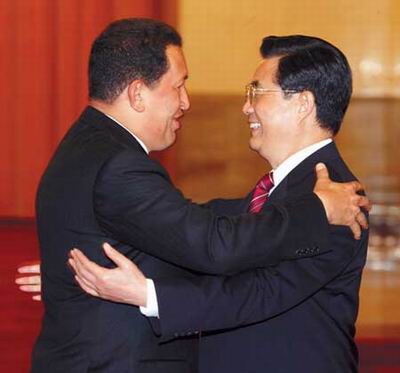

 Print This