|

|
A Color Revolution in Bishkek Fades to Black
 Print This Print This
By Jeff Goldstein
The Moscow Times
Monday, Aug 24, 2009
Outside observers sometimes see what they want to see in Kyrgyzstan. In its early years of independence, some in the West called the country’s first president, Askar Akayev, “the Thomas Jefferson of Central Asia.” This overlooked the fact that as early as 1994, Akayev demonstrated a disturbing tendency toward authoritarian rule. By the time he was overthrown in the 2005 Tulip Revolution, Akayev’s rule was characterized by widespread corruption and clan-based political favoritism.
Observers saw the Tulip Revolution as another in a string of democratic movements sweeping the former Soviet republics. In reality, the Tulip Revolution was nothing more than a change of political regimes, from one corrupt leader to another.
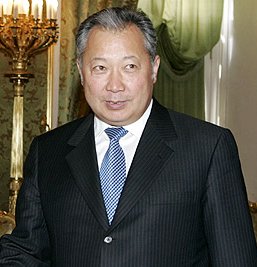 |
| Kyrgyz President Kurmanbek Bakiyev |
|
The July presidential election shows how far Kyrgyz President Kurmanbek Bakiyev has strayed from the Tulip Revolution’s democratic ideals. Organization for Security and Cooperation in Europe monitors witnessed widespread irregularities. The result was another five-year term for Bakiyev, who won with a reported 76 percent of the vote.
These elections capped a decline that began when Bakiyev rammed through constitutional changes in 2007 that greatly strengthened the presidency. He then oversaw flawed parliamentary elections, after which the authorities had to deftly maneuver to ensure that more than one party made it into parliament — a move that curiously denied a single seat to the party that actually won the second-largest number of votes.
Last year, the government further restricted basic freedoms, leading Freedom House to classify Kyrgyzstan as a consolidated authoritarian regime for the first time. Government corruption and its assault on Kyrgyz citizens’ rights is exacerbating the serious structural problems the country faces and, most disturbing of all, violence and murder are now staples of Kyrgyz politics.
Unlike its vocal support for the Tulip Revolution, Western reaction to Kyrgyzstan’s democratic decline has been muted. Many see this as a desire not to upset Bishkek after it decided to allow the U.S. military to continue using the Manas base.
Now that Bakiyev secured a second presidential term, the key question is whether he will ease up, perhaps striking a deal with the opposition to allow early parliamentary elections, or will he tighten the screws even more? Unfortunately, Bakiyev’s record suggests the latter possibility is the most likely.
The Moscow Times
 Print This Print This
|
If you appreciated this article, please consider making a donation to Axis of Logic.
We do not use commercial advertising or corporate funding. We depend solely upon you,
the reader, to continue providing quality news and opinion on world affairs. Donate here
|
|
Featured

|