THE WORLD'S tectonic plates are always in motion, but in the past
two months, they seem to have struck more dramatically than usual.
On January 12, a 7.0-magnitude earthquake devastated Haiti, killing
as many as 300,000 people and leaving more than 1.5 million people
homeless. Then, on February 27, another quake hit southwestern Chile,
killing hundreds and leaving more than 2 million people homeless.
One Haitian family, the Desarmes, tragically endured both diasters.
After the earthquake struck Haiti, Pierre Desarmes, a Haitian musician
based in Chile, where he performs with his band, the Reggaeton Boys,
brought his father, mother, two brothers and their families to live
close to him in Santiago. They were there when the second quake hit
Chile.
"In Haiti, they got me out from under the ruins of a house, and I
felt lucky to have survived," Pierre's father, Joseph, told the BBC.
"To come to Chile and go through the same situation, you can't imagine
how I felt--how powerless I felt. It was the worst thing that could
have happened to me."
Their story invites comparison of the two earthquakes--and indeed,
the mainstream media made much of the natural and social differences
that separated the two countries' experiences.
While the magnitude of the earthquake in Haiti measured 7.0 on the
Richter scale, it hit eight miles below the earth's surface, and its
epicenter was close to the country's main population center, the
capital of Port-au-Prince. It therefore caused far more severe ground
shaking and brought down many more buildings. Disaster experts estimate
it will cost $14 billion to rebuild Port-au-Prince alone.
In Chile, by contrast, the earthquake was 500 times more powerful at
8.8 on the Richter scale, but its epicenter was 22 miles below the
surface and much further away from major population centers. As a
result, the degree of ground-shaking and consequent destruction of
housing and infrastructure was less extensive.
On the other hand, because the epicenter was in the Pacific Ocean,
it caused 50-foot tsunamis that leveled villages up and down the
southern coast of Chile.
Moreover, despite early claims that the Chile's building codes
protected the country from devastation on the same scale of Haiti, it
has become increasingly clear that the quake caused massive damage to
the country's second largest city, Concepción, as well as roads and
bridges elsewhere. About 500,000 homes were left uninhabitable by the
quake and tsunamis. It will cost an estimated $30 billion dollars to
rebuild the country's housing and infrastructure.
Nevertheless, the level of death and devastation in Chile wasn't as
severe as in Haiti--and this has nothing to do with plate tectonics,
fault lines or epicenters. The real reason for the difference is social
and historical.
Haiti, as the press has repeatedly reported, is the poorest country
in the Western hemisphere, with over 80 percent of the population
living under the poverty line.
The U.S. government is largely responsible for this situation. It
has backed predatory dictators, undermined attempts at social reform,
and imposed neoliberal economic plans that destroyed peasant
agriculture and drove people into Port-au-Prince, where U.S.-sponsored
sweatshops could not absorb them.
As a result, they were left indigent in giant poorly constructed
slums. The US also incapacitated Haitian state, which controls little
of what happens in the country. Therefore the Haitian government does
not even have building codes even in its capital, Port au Prince, which
sits on a fault line. Because of this history of American imperialism,
Haiti was already a social disaster ever more vulnerable to natural
ones.
By contrast, Chile is one of the wealthier countries in Latin America. Its per capita GDP is $14,700 compared to Haiti's $1,300.
But such statistics can obscure the massive social inequality in the
country--again, the product, in large part, of U.S. imperialism. The
U.S. backed the military dictatorship of Gen. Augusto Pinochet, which
overthrew the reform socialist government of Salvador Allende in 1973,
murdered thousands of activists and unionists, and imposed free-market
economic policies at gunpoint.
Pinochet undermined many social reforms and vastly expanded social
inequality. But he couldn't erase all of Allende's accomplishments--for
example, the country's famous building codes. As author Naomi Klein
wrote in the Nation:
Chile's modern seismic building code, drafted to resist earthquakes,
was adopted in 1972. That year is enormously significant because it was
one year before Pinochet seized power in a bloody U.S.-backed coup.
That means that if one person deserves credit for the law, it is not
Friedman or Pinochet, but Salvador Allende, Chile's democratically
elected socialist President.
Pinochet was never able to privatize the country's copper industry,
which produces a third of the world's supply. As a result, the Chilean
state is flush with resources that it could use to reconstruct the
country.
- - - - - - - - - - - - - - - -
WHILE THE mainstream media made much of the differences between the
two disasters, the similarities are striking. In both cases, the
behavior of the countries' rulers and governments--not to mention the
role of the U.S. government--has exposed the priorities of a system
that puts corporate profits and law and order over human need.
In both countries, neoliberalism exacerbated the impact of the
natural disasters. U.S. neoliberal policies weakened the state and
destroyed the economy in Haiti, making it peculiarly vulnerable to
disasters and incapable of responding to them.
In Chile, Pinochet's neoliberalism created vast pools of poverty,
deprived of basic social services before the earthquake. As Naomi Klein
notes, Pinochet's free market policies "caused rapid
deindustrialization, a ten-fold increase in unemployment and an
explosion of distinctly unstable shantytowns."
Successive center-left coalition governments that have ruled Chile
from 1990 until 2010 have done little to redress this inequality, and
have in fact continued the neoliberal policies of the dictatorship. The
impoverished were thus the most devastated by the quake, and also those
quickly demonized as "looters" for breaking into stores to survive.
Moreover, as many homeless Chileans can attest, the construction
industry observed the country's widely heralded building regulations
more in the breach than the observance. As the Chilean revolutionary
group, Movimiento de Izquierda Revolucinaria (MIR), reports:
The old highways and bridges made by the state resisted the quake. The
new highways in the capital, no. The highways that were privatized
under the coalition government, which were propagandized as
public-private investment, did not stand up to any seismic movement and
are destroyed.
In spite of millions in government subsidies, in spite of contracts,
in spite of the daily fees from users, all the bridges, pedestrian
passages have all come down, killing people and wounding many more.
The quake also exposed how the housing industry evaded the building
codes. "Residents of a collapsed 15-story apartment building in
Concepcion, opened just months ago, were outraged that it had been so
badly damaged and were convinced that contractors had not complied with
building codes that require buildings to be able to withstand
tremblors," the New York Times reported. "Already, there was talk among residents of taking builders to court once the emergency was over."
As the MIR concludes, "In real estate capitalism, the business is
not in building, but in accumulating capital, which means lowering the
quality of construction, lowering the quality of the materials,
falsifying reports and bribing the tax collectors."
In both disasters, the government was, in fact, slow to respond to
the crisis. In Haiti, the country's government is powerless--the real
governmental power is the United Nations occupation, backed up by the
U.S. As has been amply documented, most recently in a new report by
Refugees International titled "Haiti: From the Ground Up," the UN and
the U.S. failed to respond to meet people's needs in a timely or
coordinated fashion.
In Chile, the outgoing center-left government of Michelle Bachelet
failed to respond as well. With almost criminal neglect, the Chilean
Navy, which is tasked with alerting the country to the threat of
tsunamis after earthquakes, failed to warn coastal villages of the
impending waves.
"Nobody showed up around here to warn us," a resident, Alejandra Jara, told the BBC.
"We fled on our own because we now that when there's a big earthquake,
you have to leave everything and take off." Untold numbers of people
didn't flee and are either dead or missing.
Moreover, just as in Haiti, the Bachelet government failed to
quickly get food, water and shelter to the 2 million homeless people.
"The government has been very slow to respond," Victor Perez told the New York Times,
as he stood by a tent that he and his girlfriend were living in,
outside their ruined Santiago apartment building. "We have no water or
lights, and most of the stores nearby are out of food."
The Christian Science Monitor reported that deprivation was
much worse in the Maule and Bio Bio regions--the areas closest to the
epicenter. "Really what people need is water, non-perishable food, warm
clothes and medicine," Daniel Agredano told the paper. "Help is
arriving, but only a bit at a time. It should have come more quickly.
That's why people go so desperate and started looting the supermarkets."
In both countries, the international media's initial sympathy for
victims of the disaster has shifted to the demonization of desperate
people as "looters" for taking food and water from supermarkets.
This has served as justification for massive military deployments.
In Haiti, the U.S. government deployed 20,000 troops under the cover of
providing relief; they actually policed desperate people and surrounded
the country to prevent any refugee seeking sanctuary in the U.S.
In Chile, Bachelet buckled under pressure from the right wing and
business interests, which were terrified at what they called "looting"
of supermarkets in Concepcion, and sent 14,000 troops to protect
corporate property and impose an 18 hour-a-day curfew. After deploying
the troops, she warned, "We understand your urgent suffering, but we
also know that these are criminal acts that will not be tolerated."
In both countries, quake victims had to rely on themselves to
survive. Deprived of government aid, Haitians and Chileans both formed
local committees to organize themselves, distribute food and water, and
assist one another in organizing shelter for the homeless.
- - - - - - - - - - - - - - - -
AS THE Center for Constitutional Rights' Bill Quigley and other
eyewitnesses in Haiti have documented, without aid, Haitian victims of
the earthquake have had to turn to one another to help with food, water
and shelter. In Chile, local committees have sprung up among quake
victims, especially in remote coastal villages, to provide similar
services.
The story of international assistance is also remarkably similar.
Just as in Haiti, the response of capitalist governments around the
world to Chile's earthquake has been laughable.
The "international community" offered a pittance to Haiti. The U.S.,
for example, only put up $100 million, a sum that pales in comparison
to Obama's $650 billion military budget or the $3 trillion it will have
spent to occupy Iraq and kill 1 million Iraqis.
Similarly, after Bachelet finally called for international
assistance for Chile, countries around the world again offered only
tiny sums. For example, the European Commission has already approved $4
million in emergency aid for Chile, Japan has pledged $3 million, and
China $1 million. This is not humanitarian aid, but public relations
stunts--designed not to help victims, but to secure international
alliances and win domestic political support.
In the aftermath of the quakes will come what Naomi Klein has called the "shock doctrine."
In Haiti, the U.S. is taking advantage of the disaster to implement
former World Bank researcher Paul Collier's plan to exploit the
country's "comparative advantage"--its impoverished workers--in mango
plantations, the tourist industry and sweatshops.
In Chile, incoming center-right President Sebastian Pinera--a
billionaire businessman and supporter of Pinochet's brand of
free-market economics--has railed against the "looters" and pressured
Bachelet to deploy the military.
While he promises to continue the center-left economic policies of
previous governments, Pinera will be under pressure from his
Pinochetista supporters on the right for a turn to further free-market
economics. He will also use the precedent of Bachelet's deployment of
the military to justify further policing of the growing ranks of the
poor.
As for the U.S., it is using both disasters to attempt to recover
ground it lost throughout Latin America and the Caribbean. It faces
regional challengers from several left governments that have come to
power in Latin America--most significantly, Hugo Chávez in Venezuela.
Chávez has spearheaded the formation of the regional economic
organization ALBA and the new regional political formation established
at Rio Summit in Mexico that includes all the countries from the
region, but for the first time ever excludes the U.S. and Canada. On
top of that, many of these countries are forging political and economic
bonds with other regional powers like Iran, as well as the U.S.'s main
international competitor--China.
The U.S. has used the cover of humanitarian intervention in Haiti to
assert its role as the boss of the region, taking control of the
country in a de facto colonial seizure of state power--as when it took
over the airport, diverting aid flights from other countries and taking
emergency power from the quisling government of René Préval.
Barack Obama has sent Hilary Clinton on a tour to build
relationships with the region's right-wing governments, including a
stop in Chile, where she met with Pinera and Bachelet. In an expression
of "generosity," she delivered a grand total of 25 satellite phones to
aid in the coordination of disaster relief.
The U.S. wants to cultivate relationships with right-wing government
to split the various regional blocks and international compacts with
China and Iran that threaten its historic dominance of the region.
- - - - - - - - - - - - - - - -
THE DISASTERS in Chile and Haiti should be a cautionary tale. We
will confront more natural disasters of this sort, which the economic
system and its governments will fail to respond to in a manner that
puts people first.
We aren't facing more earthquakes; there is no demonstrable increase in natural tectonic activity.
Instead, we are vulnerable to killer earthquakes for social
reasons--vast cities have been built in areas to take advantage of
natural features conducive for economic development, like the
intersection of rivers, which tend to lie atop fault lines.
Such killer quakes will be a particular threat in the Third World,
where neoliberal agricultural policies have driven millions of peasants
from the countryside into vast urban slums, ruled by neoliberal states
that provide no social services and enforce no building regulations. As
Seismologist Roger Bilham told Democracy Now!:
I forecast that it is possible now to have something that has never
happened in earth's history: an earthquake killing perhaps a million
people. And how can you make such a ridiculous prediction? The answer
is that never before have had such large populations at risk from
earthquakes, cities of 12 million.
There are many cities like this, and several of them, like Istanbul
and Tehran, have a history of damaging earthquakes, and we may well see
the effects of corruption and building practices revealed only after
these earthquakes have struck.
On top of that is climate change, a new phenomenon caused by
capitalist development, that will force whole areas to flee rising
water levels and that confronts the whole world with more and more
devastating killer storms.
The disasters in Haiti and Chile will fade from the headlines. But
as the U.S. knows from the tens of thousands of refugees from Hurricane
Katrina, that doesn't mean the crisis is over. Thus, Haiti is dropping
out of the U.S. news, but Ophelia Dahl from Partners in Health warns:
More than seven weeks after the earthquake, there remains an urgent
humanitarian crisis. The situation is very bad and getting worse. We
witnessed hundreds of thousands of people living in makeshift temporary
shelters; spontaneous settlements made of scraps of cardboard and
plastic bags. What little people have is soaked, because they're
sleeping in the rain, and the makeshift shelters are already breaking
down and dissolving.
The conditions for the homeless and displaced people are absolutely inhumane and getting worse every single day.
No doubt the same fate will befall the impoverished victims of the
disaster in Chile. Thus, while on the surface, the story seemed to be a
tale of two different earthquakes, the reality in both cases is
remarkably similar. Capitalism--in advanced countries, or
industrializing ones, or the poorest nations--puts profit and stability
over people, even amid disaster.
Socialist Worker





 Print This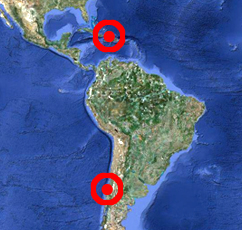
 Print This